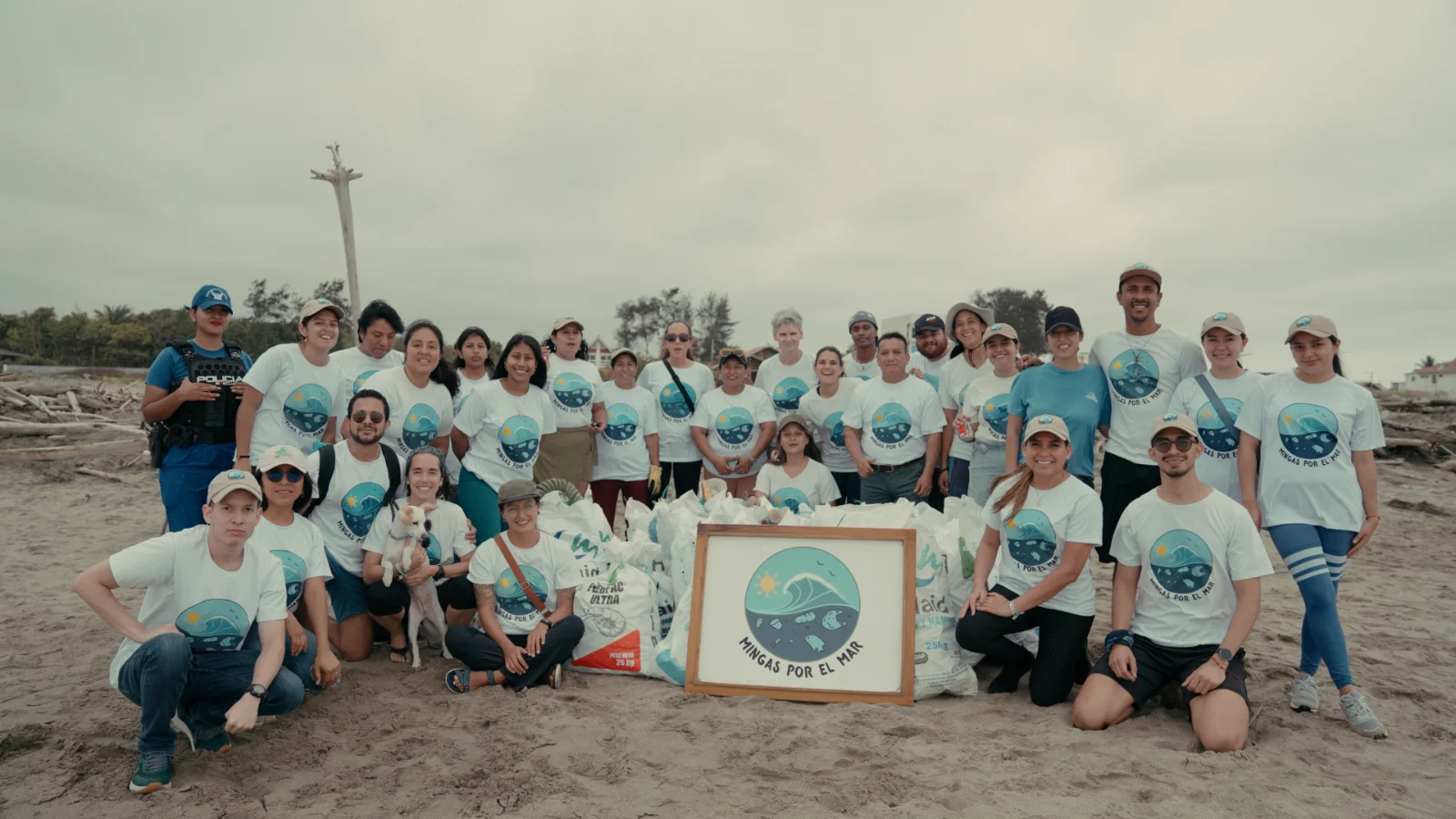
When four surfers began cleaning Ecuador’s beaches in 2014, they were driven by a contradiction that was hard to ignore: How could such beautiful natural spaces be covered in trash? What began as a response to pollution evolved into an organization that today works with communities, promotes environmental education initiatives, generates information, and develops alternatives to reduce the use of single-use plastics.

This is how Mingas por el mar was born—an Ecuadorian foundation committed to a fundamental idea: to tackle plastic pollution, it’s not enough to simply remove the waste; we must understand the problem and build solutions together with those who live with it every day.
“Our mission is to work on the ground—that is, with the communities—because they are the ones who see the problem day in and day out and often lack the knowledge or tools to make these important changes,” explains Nicole Casal, the organization’s education coordinator.

Beach cleanups soon became an opportunity to generate knowledge through citizen science as well. Since 2018, Mingas por el mar has been collecting data that has helped drive changes in public policy. Complementing this work are environmental education projects and reuse systems that seek to address pollution at its root causes.
From Waste to Solution: Reuse as an Alternative
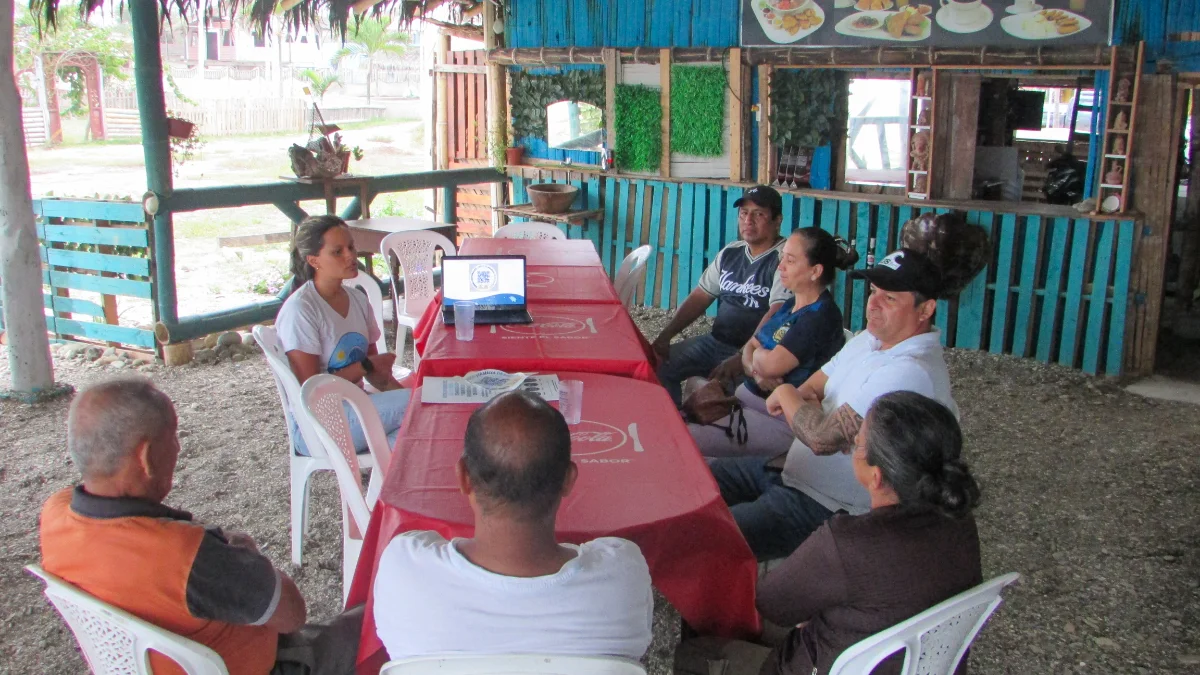
In 2023, thanks to a small local grant, Mingas por el mar launched a project to reduce the use of single-use plastics in tourist establishments by providing reusable cups and straws.
The initiative includes a preliminary survey of the establishments and monthly follow-ups for at least six months to measure results and identify opportunities for improvement. Each establishment signs a commitment agreement to ensure the items provided are cared for properly. This mechanism has helped reduce the loss of reusable items by at least 80%.
Beyond these results, the project demonstrates that alternatives to disposable plastic require support and commitment to be sustained over time. “I’ve seen how such a small and simple reuse project has been yielding very positive results,” notes Casal. Her vision is to move toward reuse and return systems that involve communities as key players and that have the necessary resources to grow and become established.

From Local Evidence to Changes in Public Policy
The data collected by Mingas por el mar since 2018 has also helped drive national regulation of single-use plastics in Ecuador, with a special focus on protected areas.
The regulatory framework addresses plastics from a perspective that considers their entire life cycle—from production to final disposal—and serves as a foundation for the organization’s work with the tourism sector.
This experience demonstrates how community action can help transform public policy: the information gathered on the ground raises awareness of the problem and provides evidence to drive measures that go beyond waste management.
Casal has observed a shift in how this issue is addressed. When she began working on the topic nine years ago, relatively few people and organizations were discussing plastic pollution with the seriousness it deserved. Today, there is more information available and a greater willingness to listen and get involved.
However, growing public awareness does not always translate into policy decisions. “The lack of involvement from decision-makers is what holds us back the most, because while many of us are speaking out and launching initiatives in this fight, there continues to be resistance from decision-makers at all levels—and it’s because of the industries that want to keep things as they are,” she warns.
In the face of these obstacles, it is essential to keep up the pressure so that institutions adopt ambitious measures that address the root causes of pollution and allow for the expansion of alternatives developed within communities.
A Local Struggle That Is Part of a Global Movement
Mingas por el mar is part of Break Free From Plastic (BFFP), the global movement that brings together organizations committed to a future free of plastic pollution. For the Ecuadorian foundation, being part of this network means connecting with other organizations, exchanging experiences, and strengthening local efforts through collective learning.
“The idea of being part of a global movement whose central goal is to fight against plastics from various angles—public policy, grassroots activism, and more—allows us to connect with other NGOs to learn from and support one another,” explains Casal.
In Ecuador, Mingas por el mar has collaborated with organizations on initiatives involving environmental education, composting, and community recycling. At the regional level, it shares its expertise in reuse systems with other NGOs so they can adapt and replicate the model in their own areas.
Reflecting on the BFFP’s 10-year history, Casal highlights the consolidation of a network that brings together organizations with different scopes and working methods, yet all sharing a common goal: “Because by connecting, learning, and building together—across organizations—we create a fairer and cleaner future, supported by a movement that respects opinions, backs decisions, and enables us to grow as an organization and as a team.”
The journey of Mingas por el mar reflects the value of this collaboration. An initiative born out of concern for beaches can generate data, contribute to policy changes, and develop alternatives that are then shared with organizations in other countries. The global movement is strengthened when it supports those who turn their common goals into concrete actions.
A Global Treaty to Change the Rules of the Game
This connection between local initiatives and international action takes on special relevance in the process toward a global plastics treaty. For Casal, the process has made it possible to bring together efforts that previously moved forward in a more scattered manner. “I believe the treaty has united these efforts under a single, broad, and important umbrella, because perhaps before, the efforts were very scattered, but now, in order to achieve a strong treaty, various NGOs and decision-makers from many countries are already collaborating with one another,” he notes.
An ambitious treaty can establish shared commitments to address plastic pollution throughout its life cycle and create conditions for local solutions to become part of a broader transformation. To achieve this, it will be essential that international commitments translate into concrete measures and that communities and organizations working on the ground have opportunities for participation and the resources to sustain their initiatives.
The experience of Mingas por el mar reminds us that global change is also built from the beaches, communities, and businesses that are committed to alternatives to single-use plastic. Ten years after the founding of BFFP, its work demonstrates that local action is indispensable, but it requires strong public policies, international cooperation, and a treaty capable of transforming the rules that perpetuate pollution.