In Brazil, the plastic crisis isn’t limited to the streets, landfills, or recycling cooperatives. It also extends to the courts, legislative assemblies, and decision-making forums that determine who bears the costs of pollution and who participates in the solutions.
Since 2017, the Institute of Collective Law (IDC) has been working to ensure that the rights recognized in Brazilian law do not remain merely on paper. Its strategy combines legal counsel, strategic litigation, research, and institutional advocacy, based on one premise: the problems affecting communities require collective responses.
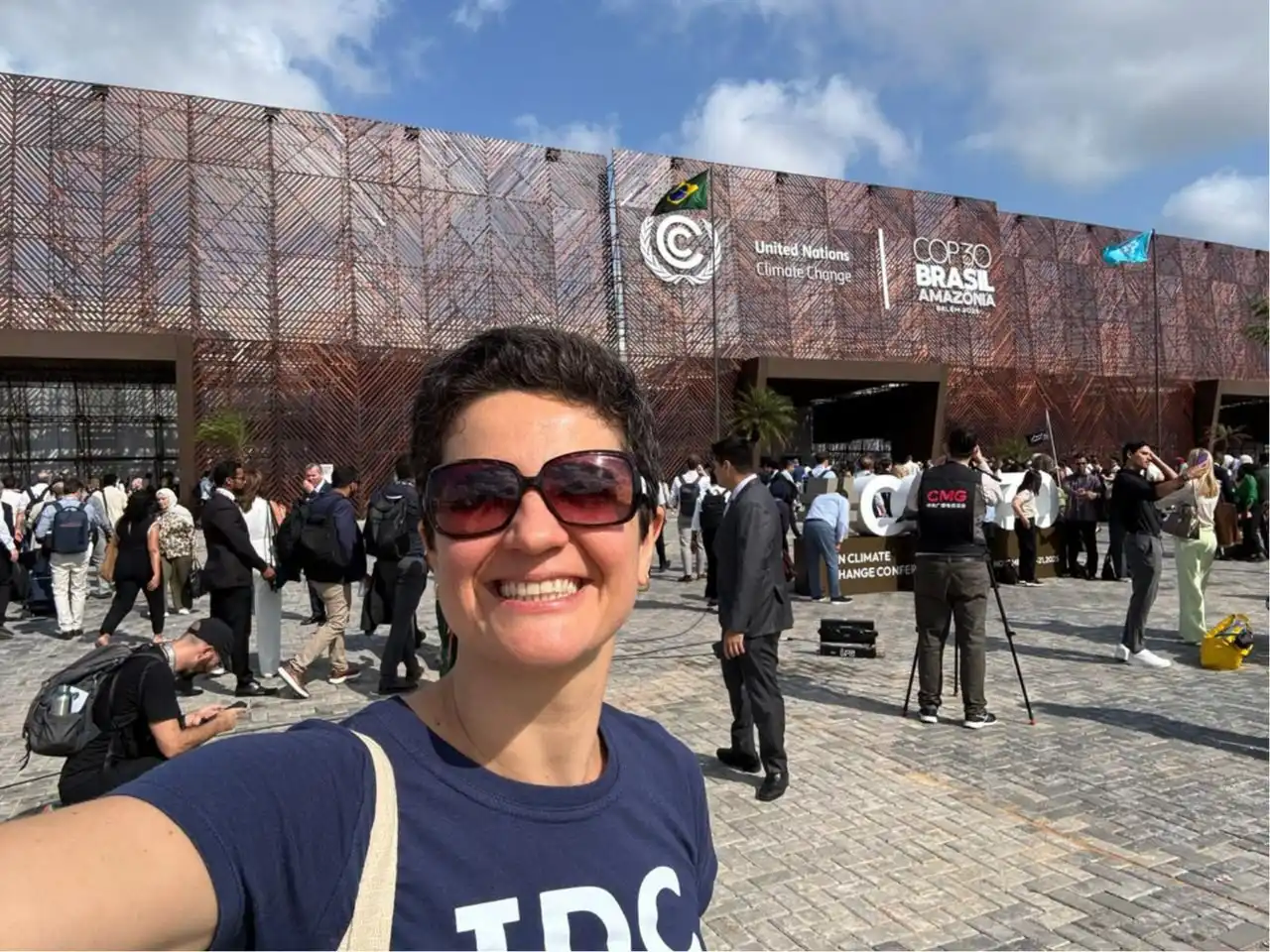
“The IDC was founded at a time when Brazil was undergoing a profound political and administrative crisis. There was a great deal of important legislation that remained on paper and was not implemented,” explains Tatiana Bastos, president of the organization. In that context, a group of legal experts and allies decided that defending constitutional rights required coordinated action.
Nearly a decade later, the Institute has established itself as a national, multidisciplinary, nonprofit organization based in Rio de Janeiro. Its network brings together more than 150 partner organizations in nine Brazilian states and the Federal District, including waste picker cooperatives, rights advocacy groups, communities, and social collectives.
Its work is structured around three pillars—democracy, inclusion, and the environment—and, within the latter, plastic pollution is taking on an increasingly prominent role.
Plastic Is Also a Matter of Social Justice
For Direito Coletivo, the plastic crisis cannot be addressed solely as a pollution problem. Its consequences are distributed unevenly and particularly affect those working at the bottom of the waste management chain.
Waste picker cooperatives face the consequences of a system that puts large quantities of packaging on the market without ensuring that it can be recovered or sold. Materials that fail to find buyers end up becoming waste, imposing economic and labor costs on those who sort them.
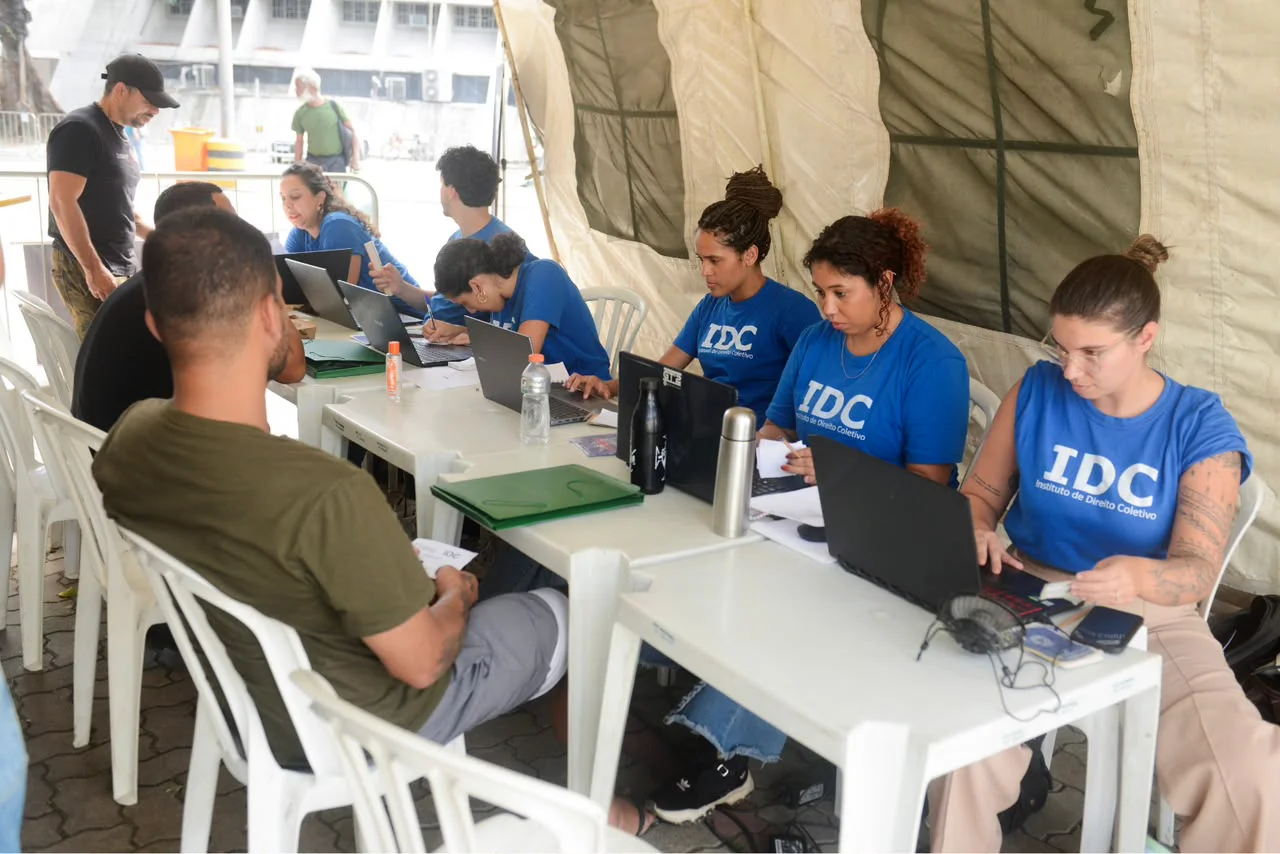
“For us, the fight against plastic isn’t just an environmental cause—it’s also a social justice cause,” says Bastos. “Much of the burden of poor plastic management falls on those who work directly with recycling: the recycling cooperatives.”
This perspective guides the “Less Plastic, More Justice” project, which seeks to hold manufacturers accountable and defend the rights of recycling workers. One of the pillars of the project was the study “Recyclers for Less Plastic,” conducted in partnership with Fluminense Federal University (UFF), GAIA, and Break Free From Plastic (BFFP). The study found that plastics with low recyclability could account for between 45% and 64% of the rejected waste analyzed at the participating cooperatives.
Although some of these containers are marketed as recyclable, in practice there is no market or economic viability for their recovery. The study estimated monthly losses of between 1,200 and 3,700 reais (approximately 235 and 725 USD) per cooperative, in addition to up to 15 hours of work per month spent sorting materials that are ultimately discarded.
The data made it possible to move from research to action. The IDC used the evidence to support a public civil action aimed at holding the companies that produce this packaging accountable and brought the debate to the Rio de Janeiro Legislative Assembly. “It was a rare case in which we managed to close the loop: technical research, institutional advocacy, and legal action, with waste pickers at the center of the strategy,” notes Bastos.
This experience encapsulates one of the organization’s core commitments: generating knowledge that can be transformed into legal and policy tools while ensuring the participation of those most affected by the crisis.
Incineration: Another Battleground
Waste management has opened up another area of work for the Institute: the expansion of incineration projects, including those presented under concepts such as waste-to-energy or energy recovery.
Bastos explains that these projects are moving forward in various Brazilian states despite the socio-environmental impacts highlighted by organizations, including emissions of toxic pollutants and the potential disincentive to material recovery.

Among the cases he mentions are the Barueri plant in São Paulo, touted as Latin America’s first waste-to-energy facility, and a similar project in Rio de Janeiro that, as she explained, was in the licensing phase.
In light of these processes, the IDC identified a problem that transcends the specific characteristics of each project: the lack of coordination between lawyers and the organizations working on the ground. “Legal action against these projects was highly fragmented: lawyers, social movements, and local organizations were working in isolation, without access to legal precedents, court documents, or shared strategies,” explains Bastos.
To address this challenge, the organization created a working group for legal advice and coordination that connects lawyers from different regions of Brazil. The initiative includes regular meetings, the exchange of experiences, a shared database of case law and technical documents, as well as templates for legal instruments that can be adapted to the needs of each region. The goal is to strengthen local capacities and prevent each community from having to start from scratch when facing an incineration project.
A Network to Expand Local Struggles
The IDC’s growth is also reflected in its network. According to data shared by Bastos, the organization went from 100 partner organizations in 2023 to 124 in 2024 and 151 in 2025.
For an organization dedicated to strategic litigation and the defense of collective rights, expanding the network allows it to conduct assessments and provide legal support to cooperatives, Quilombola communities, and collectives in different regions of the country. “None of these cases moves forward in isolation; they all rely on networking,” says Bastos.
This logic also explains the Institute’s participation in BFFP. For the IDC, being part of an international movement provides access to research, facilitates the exchange of strategies, and connects the experiences of local organizations with a global agenda.
The collaboration with GAIA and BFFP, in particular, has helped advance research on recyclability and corporate responsibility, as well as broaden the dissemination of its findings. “Participating in BFFP is very important for the IDC because of the access to technical expertise that this network provides,” says Bastos. “Organizations from different countries produce top-tier research and evidence on the plastic crisis, which directly strengthens our own legal and advocacy work in Brazil.”
International coordination also makes it possible to connect local problems with dynamics that transcend borders. Cooperatives and communities facing specific problems in a municipality can link their demands to movements in other countries and to companies operating on a global scale.

A Global Treaty That Goes Beyond Paper
For Direito Coletivo, the need for a legally binding global plastics treaty stems from the limitations of current responses. “We need a robust, fair, and legally binding treaty capable of reducing plastic production at its source, rather than merely addressing the problem once it has already become waste,” argues Bastos.
His concern extends beyond the content of international commitments to their implementation. From his perspective, an ambitious treaty requires binding targets, clear timelines, and monitoring mechanisms to ensure compliance.
IDC’s experience in Brazil informs this position. Its work stems precisely from the need to translate rights and commitments into concrete actions, with mechanisms for enforcement and participation.
“The Global Plastics Treaty must move from paper to practice,” says Bastos. “For those of us who work directly with the people suffering the concrete effects of this crisis—such as grassroots recyclers—the urgency lies not only in negotiating a good treaty but also in ensuring that it translates into effective public policies and real accountability on the part of manufacturing companies.”
The Institute’s position thus links international negotiations to the day-to-day challenges faced by cooperatives, communities, and local organizations. A treaty would not be an end in itself, but rather a tool whose effectiveness would depend on its implementation on the ground.