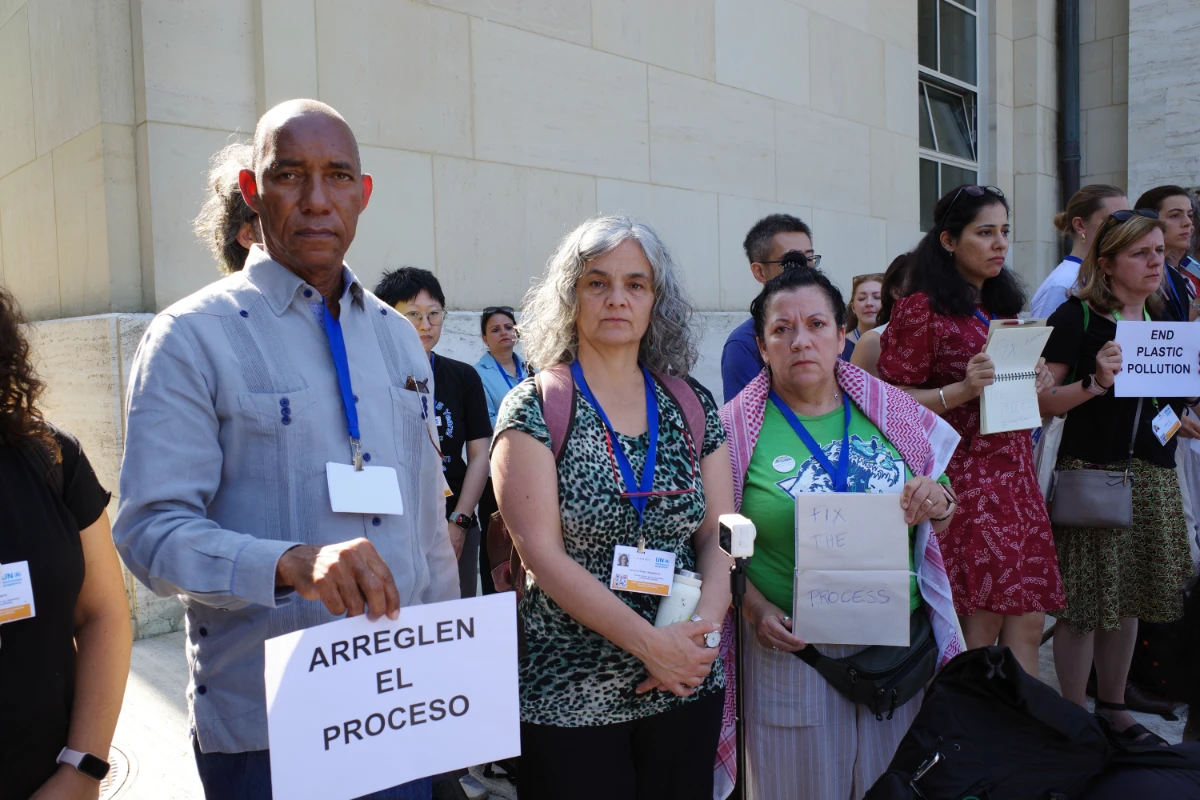
August 2026—Civil society organizations in Latin America and the Caribbean denounce the lack of opportunities for effective participation in the negotiations for the Global Plastics Treaty and warn of the impact this situation has on the transparency and legitimacy of the process.
The organizations, which have been following the negotiations since 2022, note that throughout 2026, heads of government delegations have participated in so-called “informal” meetings to discuss substantive aspects of the treaty, while observer organizations have been denied access to these forums.
Instead, they have been invited to virtual meetings with the Chair of the Intergovernmental Negotiating Committee (INC), led by Ambassador Julio Cordano, in which the primary means of interaction available is a chat function.
“The Global Plastics Treaty cannot, under any circumstances, create new ‘sacrifice zones’ or consolidate existing ones—zones marked by opacity and decisions made without public input—and observers are working to ensure that this does not happen. Keeping them on the sidelines of delegate meetings is not merely a procedural decision: it is a political act that widens the gap between those who make decisions and those who suffer the consequences. If the treaty aspires to be fair, it must be participatory from the very beginning,” explains Cecilia Bianco of the Argentine organization Taller Ecologista.

According to the organizations, this approach prevents them from timely contributing independent scientific evidence, technical expertise, and the experiences of communities and territories affected by plastic pollution, as well as from understanding and contributing to the debate on the positions that governments bring to the negotiating table.
They also expressed concern over the INC Chair’s request that observer organizations designate single representatives. They believe this measure could limit the diversity of voices and reduce the range of scientific, technical, and territorial contributions available to the delegations.
The organizations maintain that the lack of substantive participation represents a step backward from the standards previously achieved in the negotiation process itself and runs counter to the principles of environmental democracy, particularly those related to transparency, access to information, and public participation established in the Escazú Agreement.
“We have insisted that the Escazú Agreement represents a benchmark of progress for our region. Therefore, it is concerning that, while Latin America and the Caribbean have made progress in recognizing higher standards of transparency, access to information, and public participation, the negotiations for the global treaty on plastics are adopting procedures that restrict the opportunities for participation that civil society had enjoyed in earlier stages of the process. This change represents a step backward in terms of participation and transparency, particularly given that these negotiations will shape responses to a global environmental and public health crisis.
“This situation is even more paradoxical in a region deeply affected by ‘Waste Colonialism,’ which historically has received and borne a disproportionate share of the impacts of plastic pollution and waste generated by other countries,” states Larisa de Orbe of the Mexican organization Acción Ecológica.
In light of this situation, the organizations are calling on INC President Ambassador Julio Cordano and the Executive Board to reestablish mechanisms that guarantee direct, effective, and meaningful participation by observer organizations at all stages of the negotiations.
The organizations maintain that a global treaty on plastics can only be legitimate, robust, and ambitious if it is developed through a transparent, inclusive process that respects the principles of environmental democracy.
Signatory Organizations
Acción Ecológica México; Alianza Resíduo Zero Brasil; Alianza Basura Cero Chile; Alianza Basura Cero Ecuador; AMAR Asociación de Defensa del Medio Ambiente; Libérate del Plástico; Centro de Tecnologías Aplicadas de Argentina; CESTA, Amigos de la Tierra (El Salvador); Coalición Ciudadana Antiincineración (Argentina); Colectivo Ecologista Jalisco (México); Colectivo Tz’unun Ya’ (Guatemala); El Poder del Consumidor (México); FAS (Panamá); FUNAM (Argentina); Fundación Agua Clara (Venezuela); Fundación PlastiCo. Proyecto (Ecuador); Alianza Global para Alternativas a la Incineración (GAIA); Manos Abiertas La Bandada (Argentina); Mingas por el Mar (Ecuador); Organización Ecologista Piuke (Argentina); RADA (Chile); RAPAL (Uruguay); Red Dominicana de Estudios y Empoderamiento Afrodescendiente (República Dominicana); Taller de Comunicación Ambiental (Argentina); Taller Ecologista (Argentina); Toxisphera Asociación de Salud Ambiental (Brasil).