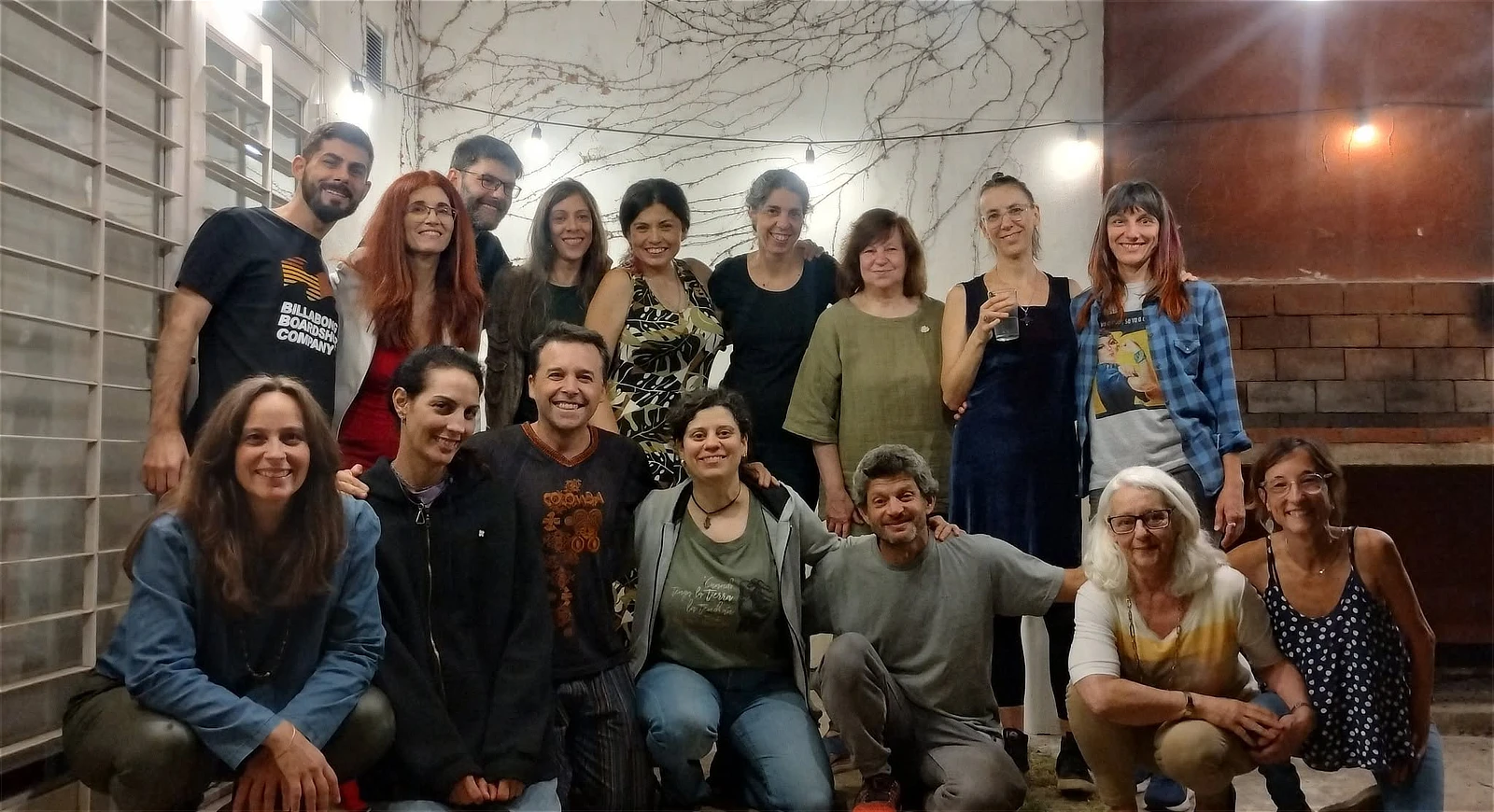
When the Break Free From Plastic (BFFP) movement was founded in 2016, Taller Ecologista had already been challenging the production and consumption model that turns plastic into a global problem for years. It is therefore no surprise that the Argentine organization was one of the movement’s founding members and that, 10 years later, it remains one of the most active voices in Latin America.
For Cecilia Bianco, coordinator of Taller Ecologista’s Toxics Program, the organization’s history demonstrates that the fight against plastic pollution has never been solely about waste. “Our mission is to protect the environment by ensuring that we have sustainable cities. We know that plastic has impacts throughout its entire life cycle, and in cities, what we see most is the waste aspect, but the problem begins much earlier”.
Founded in 1985, Taller Ecologista currently works in the areas of energy sovereignty, wetlands and water for life, socio-environmental education, food sovereignty, zero waste, and toxic substances. Although its areas of focus are diverse, there is a common principle: understanding that nature functions as an interconnected system. “That is one of the great lessons,” explains Bianco. “We have different areas of focus, but we know that nature isn’t fragmented like our organizations are”.

Changing the Conversation About Plastic
For many years, the dominant narrative held consumers almost exclusively responsible for plastic pollution. Sorting waste, recycling, and disposing of trash properly seemed to be sufficient solutions.
For Taller Ecologista, joining BFFP meant finding an international community that was asking exactly the same question they were: Who is really responsible for this crisis? “What drew us in was understanding that the cause wasn’t strictly the consumer’s responsibility. It was always said that the consumer was to blame. Today, it’s very clear that those who produce that packaging and those who market these products bear enormous responsibility”.
That shift in focus has shaped much of the organization’s work over the past decade. Brand audits—one of the tools promoted globally by BFFP—made it possible to systematically identify which companies are responsible for the plastic waste found on beaches, in rivers, and in public spaces. Taller Ecologista was one of the first organizations in the region to implement this methodology, and 10 years later, it continues to lead the way in Argentina.
Bianco recalls that the impact grew over time. “At first, it was very difficult to get the media’s attention. Today, there is significant interest in the results.” But the true value of these audits lies not solely in producing data. “BFFP’s greatest contribution was demonstrating that the problem lies not only in waste management, but also in how the product is designed and in the decisions made by those who bring it to market”.
From Diagnosis to Solutions
Beyond highlighting the problem, Taller Ecologista has spent years developing concrete alternatives to reduce single-use plastics. In Rosario, it championed proposals that are now part of public policy, such as replacing disposable tableware with porcelain or metal at the City Council. It also promoted “Zero Waste” ordinances in various cities across the province of Santa Fe and has participated in drafting regulatory proposals to eliminate disposable straws.
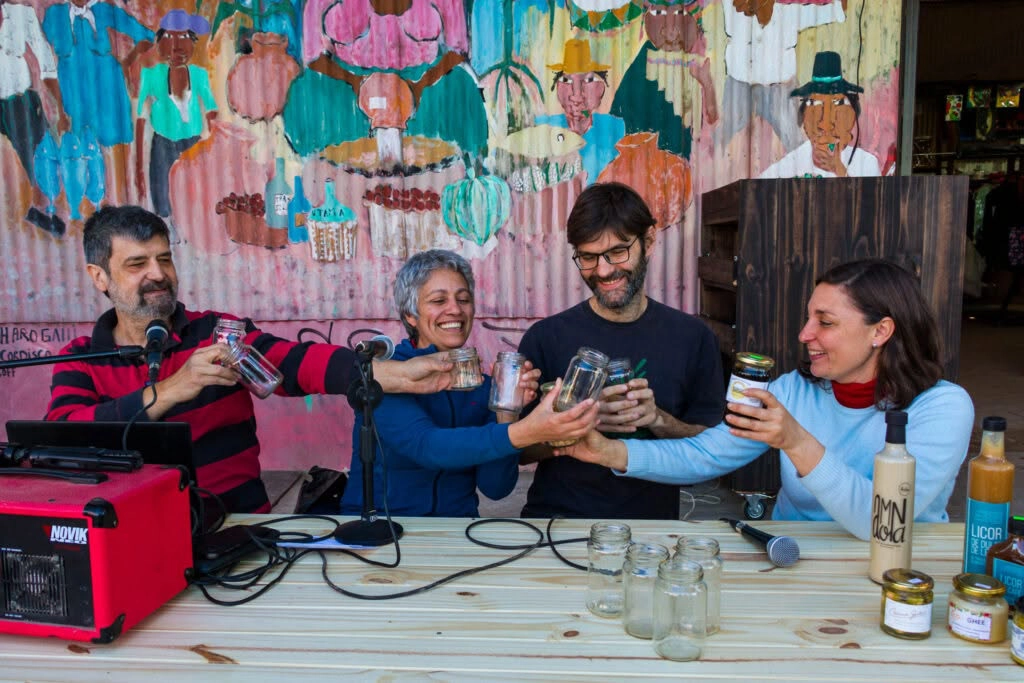
At the same time, the organization develops community initiatives that seek to demonstrate that other consumption models are possible. Among these is the reusable cup bank for social organizations, which prevents the use of thousands of disposable cups during events; “Frascos vienen y van” (Jars Come and Go), a project that recycles glass containers for reuse by solidarity economy enterprises; and the promotion of bulk sales and refill systems that reduce packaging waste. “Thanks to the awareness-raising efforts of Taller Ecologista, more businesses have joined the initiative. More and more people are bringing their own containers, and that helps spread these practices”.
The organization also works to highlight the link between plastic pollution and the petrochemical industry. Its technical expertise has even led it to advise Argentina’s Environmental Prosecutor’s Office on investigations related to the impacts of fracking within the petrochemical industry. “We’re able to access these opportunities thanks to our networking,” says Bianco. “We never work alone”.
Producing Plastic While Trying to Reduce It
Argentina not only consumes plastic but also produces the raw materials needed to manufacture it. “We are a country that produces plastic, plastic precursors, and raw materials. There is also a very powerful industry, linked to Brazil, that has enormous economic clout,” explains Bianco.
That economic power is also reflected in the difficulty of passing regulations. Bianco cites as an example the repeated failed attempts to pass a national packaging law and points out that behind every proposal to reduce single-use plastics, there is usually strong resistance from the industry.
That is why he believes change cannot depend solely on individual decisions. “People often ask how to use less plastic, and there isn’t always a simple answer. We need changes at much higher levels. That’s why the Global Plastics Treaty is so important,” she adds.

Beyond Recycling
One of the messages Taller Ecologista has been promoting is to debunk the idea that recycling, on its own, will solve the crisis. Bianco argues that for decades, the industry has used recycling to shift responsibility onto the public.
Although she acknowledges that recycling plays an important role, she warns that the reality is much more limited than is usually communicated. “Those who work in material recovery know that a significant portion of plastics simply has no market,” she adds.
Furthermore, she explains that many plastics contain mixtures of toxic chemicals that remain present even after recycling. “The key is to be transparent about what plastics contain. We’re not just talking about a polymer; there are also numerous chemical additives whose presence we’re often unaware of”.
The Power of a Global Network
After a decade with BFFP, Bianco is clear about what he considers one of the movement’s greatest achievements: building an international community capable of sharing evidence, lessons learned, and strategies to address a common problem. “We feel a strong sense of solidarity with organizations in Latin America and the Caribbean. We share very similar economic and political realities, and many solutions that work in one country can be adapted to another,” she says.
But the network’s reach extends beyond the region. Participating in BFFP means understanding that a piece of packaging found in an Argentine river can be part of a global pattern of production and consumption. “It’s a global perspective. There are products that may not directly affect us, but we know they’re having enormous impacts in other parts of the world, and we collaborate because we understand that the problem is shared,” she explains.
This coordination also strengthens organizations when they face disinformation campaigns or political setbacks. “When you’re feeling discouraged, another organization that’s made progress always comes along. So you celebrate that success and keep moving forward”.
A treaty to transform the system
For Taller Ecologista, the Global Plastics Treaty represents a historic opportunity to change the rules of the game. Bianco acknowledges that the negotiations will be long and complex, especially in a geopolitical context marked by international tensions. However, she believes the process is already bringing about significant changes.
“I always say that the treaty is the path. That path is full of opportunities to highlight the damage caused by plastic, to demonstrate that recycling, as it exists today, isn’t enough, and to discuss how products are designed,” she says.
As more scientific evidence accumulates, she explains, it becomes increasingly difficult to sustain the industry’s traditional narratives. “BFFP has become a massive international platform for disseminating scientific information on the impacts of plastics. That information is now unstoppable”.
Building a Movement
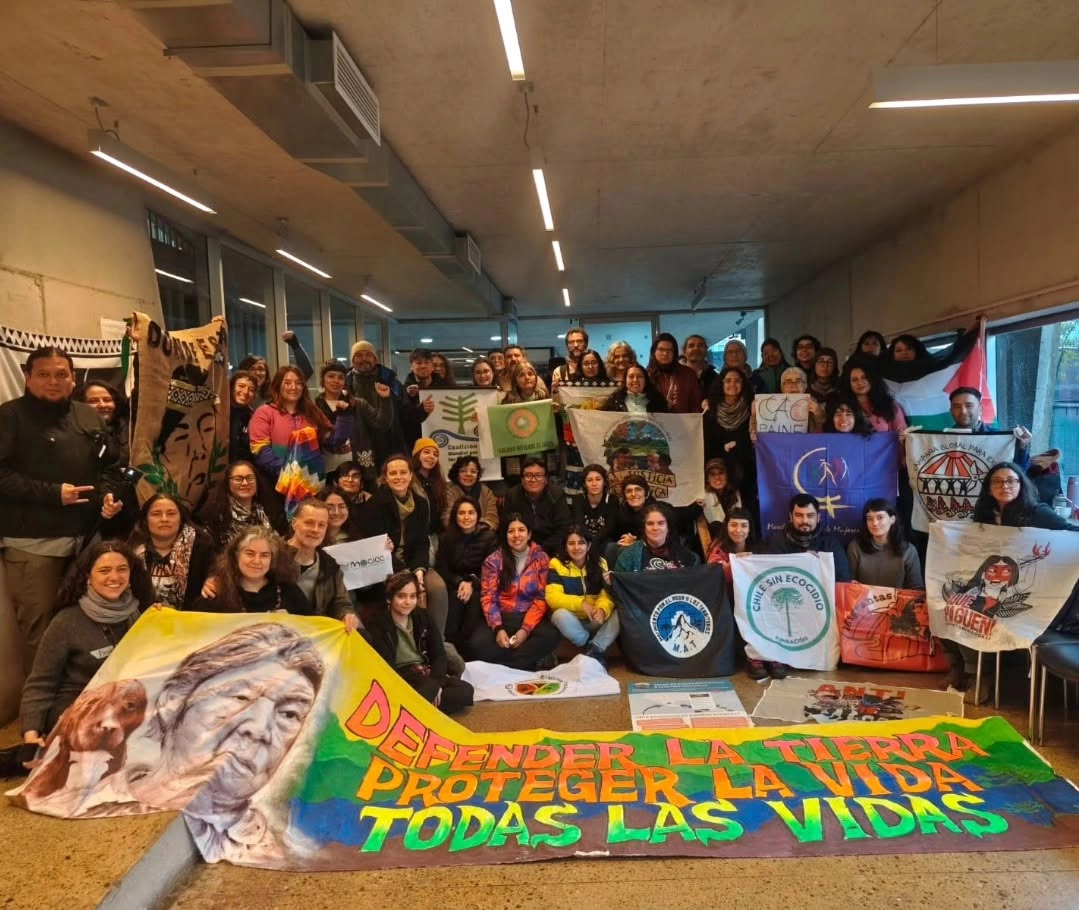
Organizations like Taller Ecologista show that the most profound transformations do not occur solely in international negotiation forums. They are also built in cities, through local ordinances, brand audits, businesses that adopt refill systems, people who reuse containers, and, above all, through alliances that cross borders.
When asked what she would say to someone who wants to get involved in the fight against plastic pollution, Bianco doesn’t start by talking about campaigns or technical knowledge. She talks about collective work. “You have to be patient, stay informed, and be flexible. But above all, you have to work as a team, with other organizations. That’s essential,” she says. And before ending the conversation, he offers one final reflection that sums up both Taller Ecologista’s experience and the spirit of BFFP: “Working with organizations in Latin America and the Caribbean is wonderful. It’s truly exciting.”