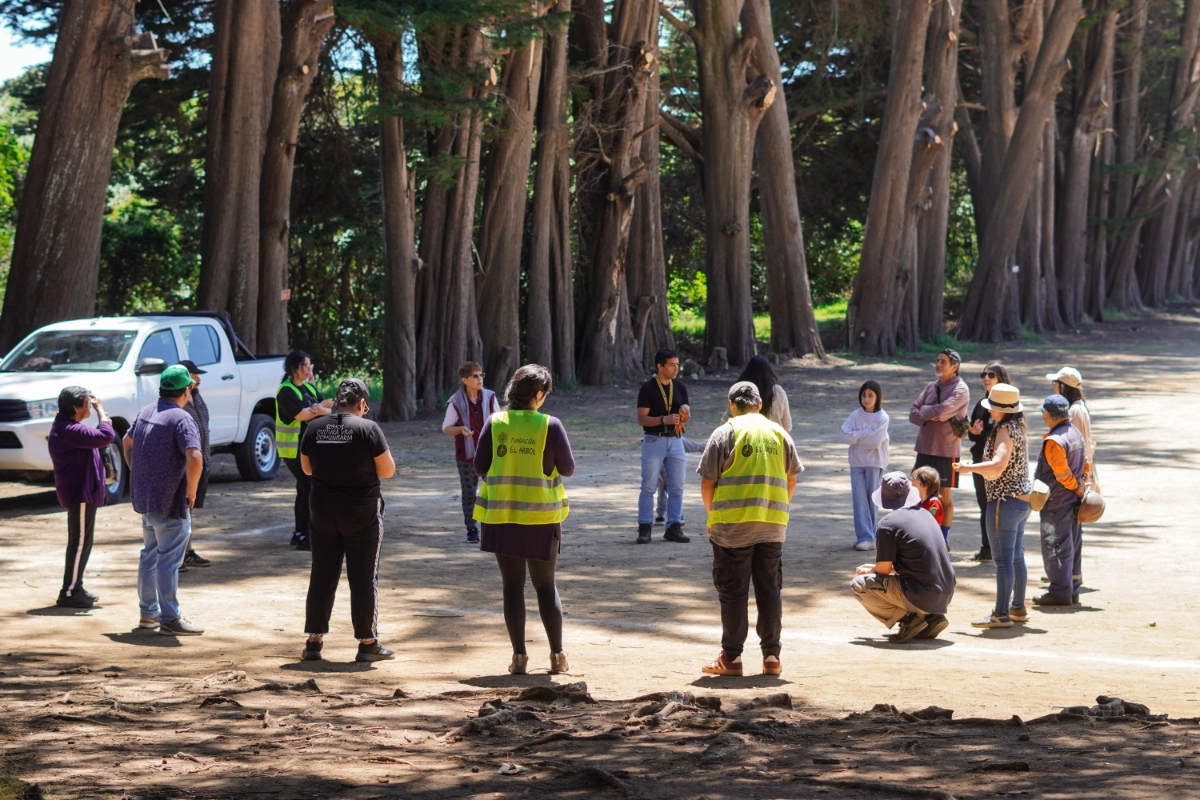
In Concepción, in southern Chile, 12 years ago a group of people decided that the environmental crisis could not be addressed solely through nature conservation. It was also necessary to examine the way we live, produce, consume, and interact with our environment. Thus, Fundación El Árbol was born—an organization that addresses issues of zero waste, the regenerative economy, and the empowerment of grassroots waste pickers.
For Milton Neira, the organization’s executive director, the mission remains as relevant today as when they began: “Fundación El Árbol was founded with the purpose of balancing the relationship between people, society, and nature.” This balance is expressed through three lines of work. The first seeks the social and environmental regeneration of ecosystems. The second promotes regenerative economies and decent work, especially for grassroots waste pickers. And the third promotes zero-waste strategies to reduce waste generation and transform the way communities interact with waste.
The Plasticization of Everyday Life
However, for the organization, there is a challenge that cuts across all these areas: the growing dependence on plastic. When Milton Neira speaks of this material, he does so from a perspective that goes beyond waste management. For him, the spread of plastic represents a profound transformation of modern life. “We believe that one of the main things that throws us off balance in daily life—especially in urban life—is the plasticization of daily life,” he states.
From his perspective, the problem is not limited to visible pollution; it also has to do with the disconnect it creates from ways of life more closely tied to nature and from practices that, until a few decades ago, were commonplace. “We have become dependent on a technology from the last 50 years, the long-term consequences of which we are not yet fully aware,” he argues.
This reflection is particularly relevant in Chile, where regulatory advances have positioned the country as a regional leader in the fight against single-use plastics. However, for organizations like Fundación El Árbol, true transformation requires more than just laws: it requires profound cultural changes.
Recognizing Grassroots Waste Pickers
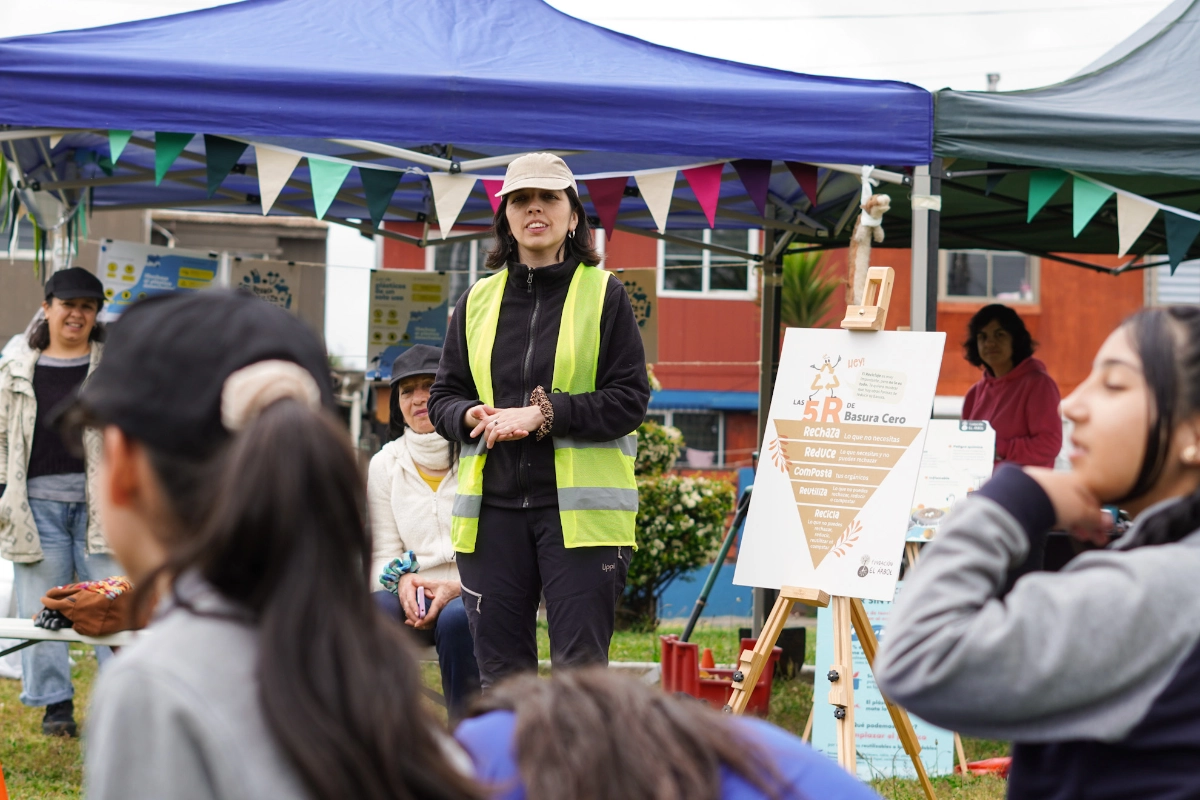
Among the most significant achievements the organization identifies from its work over the past 12 years is raising awareness of the role of grassroots waste pickers. “We believe progress has been made in terms of coordination, autonomy, and independence for waste pickers,” notes Neira.
Long before debates on the circular economy made their way onto the public agenda, Fundación El Árbol was already promoting initiatives to recognize the environmental and social value of those who recover recyclable materials and contribute daily to preventing thousands of metric tons of waste from ending up in landfills and disposal facilities.
This work has been accompanied by a growing commitment to reuse and repurposing—practices the organization considers essential for reducing dependence on disposable products. “Reuse is a fundamental action that any citizen can take,” he explains.

From Talk to Action
One of the biggest challenges the organization faces is getting people to move from environmental concern to everyday action. Neira acknowledges that there is a greater understanding of the problems associated with waste, but warns that the idea that trash is someone else’s responsibility still persists. “People can understand the message, talk about it, and even agree with it. But taking that step toward action is a major challenge,” he says.
Even so, he sees encouraging signs. More and more people are adopting habits such as carrying reusable bottles, thermoses, or their own utensils. These are small changes that help challenge the throwaway culture and pave the way for deeper transformations.
However, he maintains a critical view of the global landscape. “Everything we do could be window dressing if we don’t curb plastic production,” he warns. For him, drastically reducing production remains the most important measure for addressing a crisis that continues to grow on a global scale.
Zero Waste: A Possible Solution
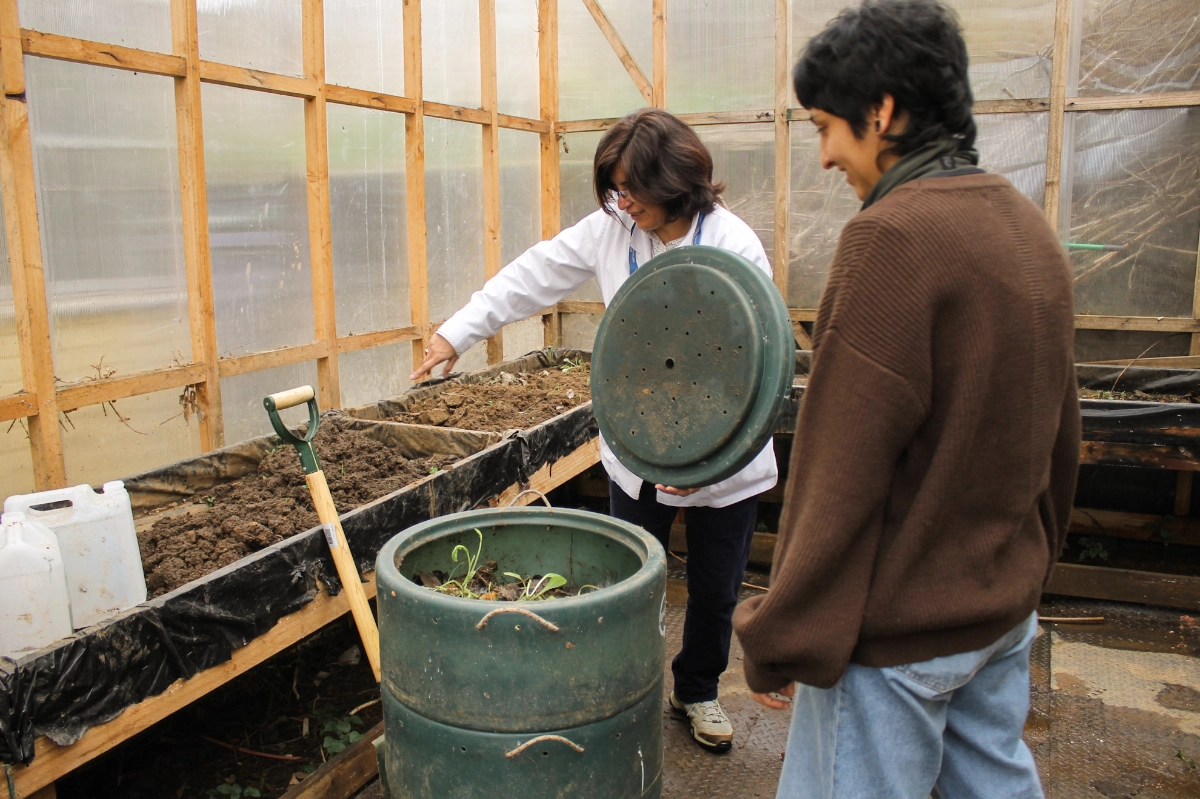
While many municipalities face growing difficulties in managing their waste, Fundación El Árbol insists that viable alternatives exist. The organization promotes the zero-waste approach not only as an environmental philosophy but also as a practical strategy with economic, social, and environmental benefits.
Neira envisions cities where the vast majority of organic waste is composted and where the remaining materials can be reused, recycled, or kept within production cycles. “Waste would become a thing of the past,” he says.
The proposal takes on special relevance in Chile’s Biobío region, where the gradual closure of landfills is forcing local governments to seek new solutions. “Right now, the logistical cost of waste management is very high, and landfills are being closed. The solution is zero waste,” he maintains.
Ten Years of a Global Network
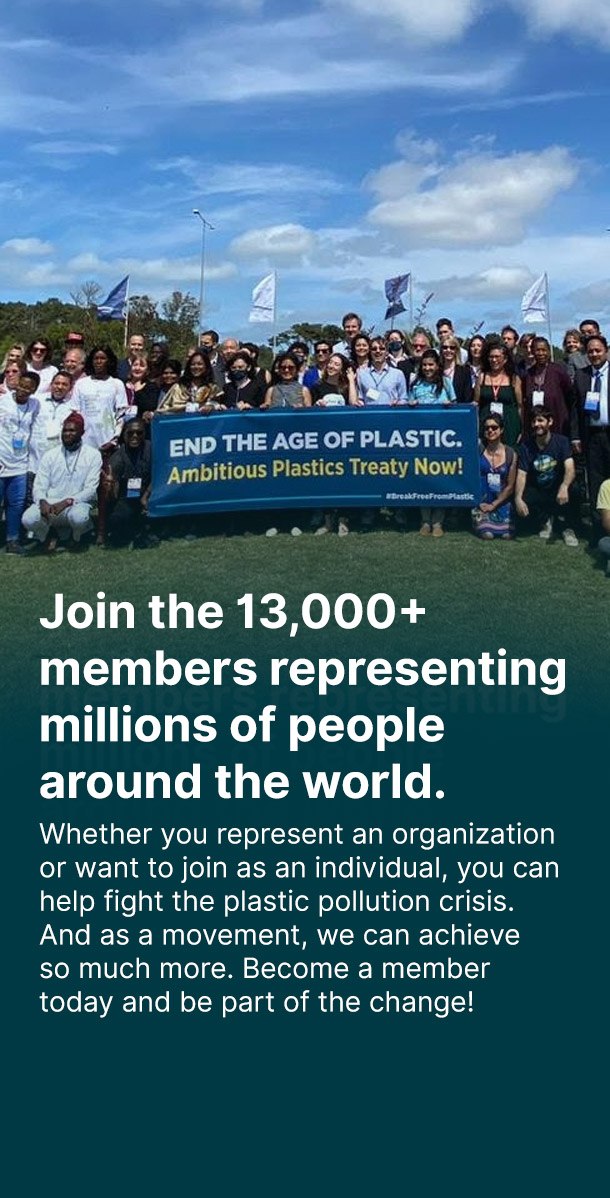
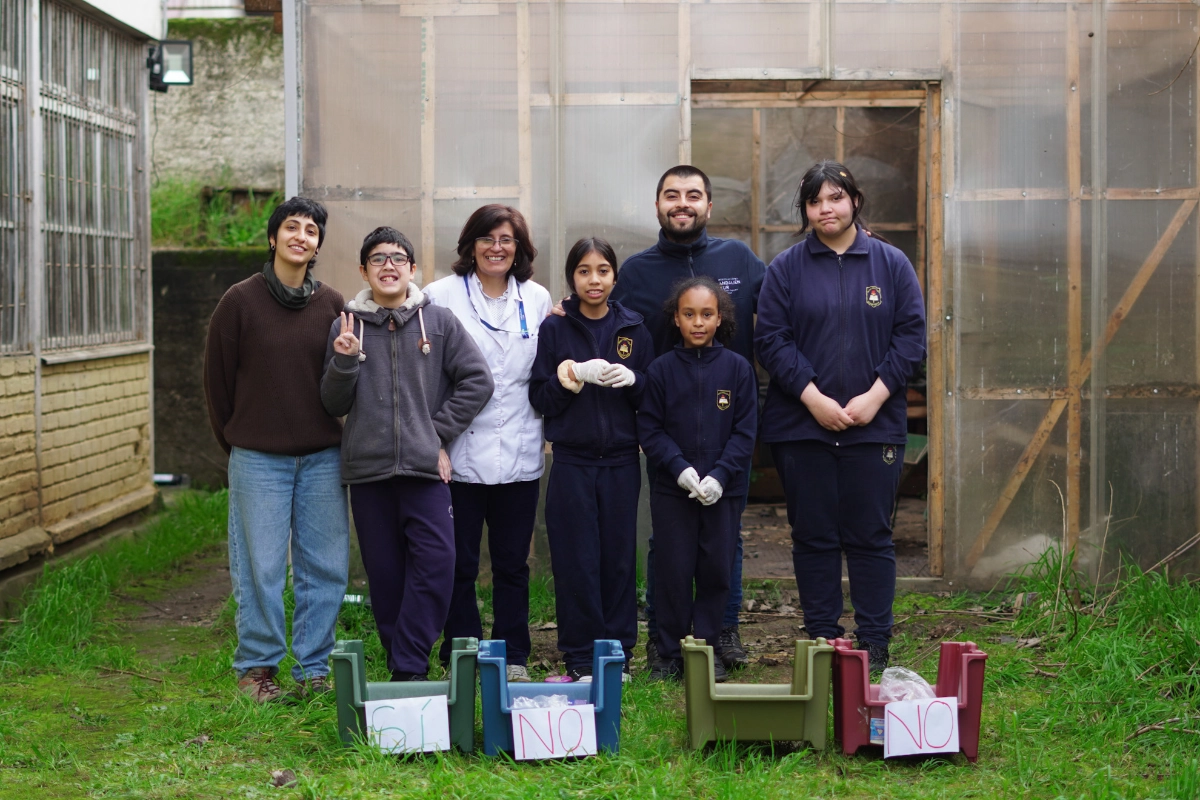
The history of Fundación El Árbol is also deeply intertwined with that of Break Free From Plastic. The organization was one of the first in Latin America and the Caribbean to join the movement and has been part of the network since its inception in the region.
The decision was a natural one. “Twelve years ago, in Concepción, almost no one was aware of the waste problem, and much of that waste was plastic. When the opportunity arose to join a network seeking to phase out plastic, we joined immediately,” recalls Neira.
For him, the value of BFFP goes far beyond political coordination. “There is an exchange of knowledge, experiences, and tools that strengthens us as a network, but also as individual organizations,” he explains.
Over the past decade, the movement has succeeded in connecting local struggles with a global cause, allowing successful experiences to be shared and adapted to different contexts. “The main thing Break Free From Plastic has done is connect organizations around a cause that transcends the immediate problems facing their communities,” he says.
The network has also helped generate concrete projects, strengthen organizational capacities, and provide strategic information to address one of the most urgent environmental challenges of our time.
A High-Ambition Global Plastics Treaty
As negotiations for a global plastics treaty move forward, Fundación El Árbol is watching the process with anticipation, but also with concern.
Neira believes the agreement must address the problem at its source: production. “There must be clear commitments toward a drastic reduction in plastic production, moving toward its phase-out and incorporating a just transition,” he argues.
He also warns that it should not be so easy for a small number of countries to block consensus. Current rules allow countries with low ambition or those influenced by the petrochemical industry to stall progress.
For organizations working on this issue every day, the treaty represents a historic opportunity to drive structural changes that complement local efforts.
Think Globally, Act Locally
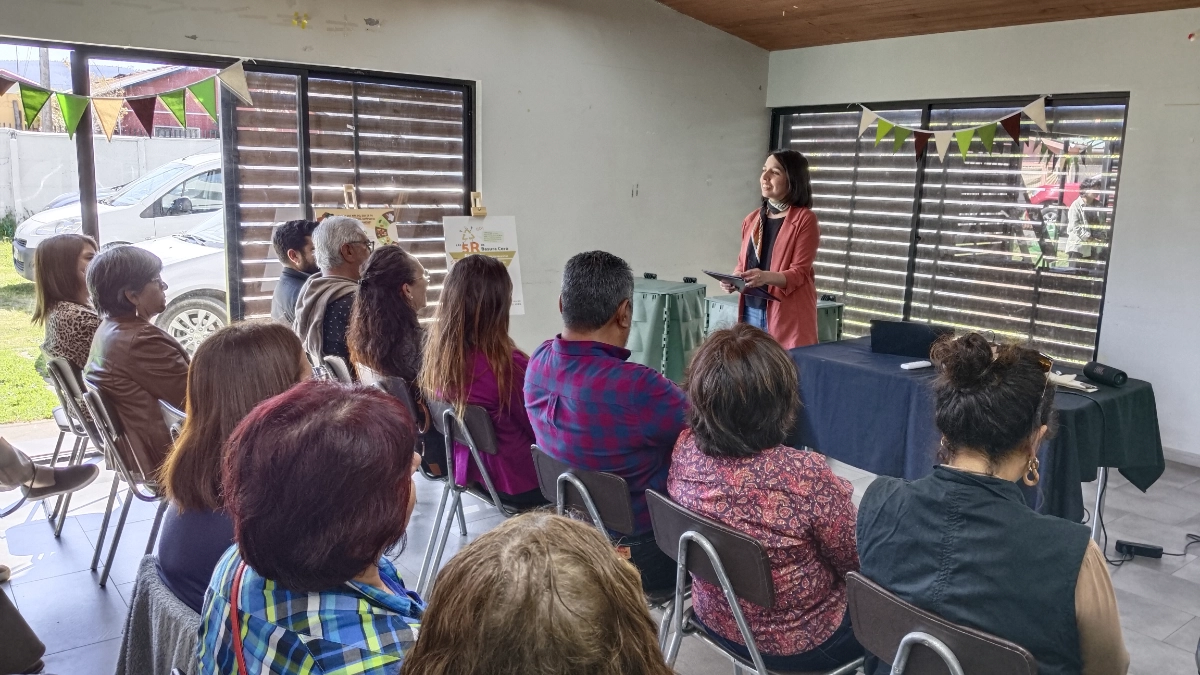
The experience of Fundación El Árbol demonstrates that solutions do not arise solely from international negotiations or in large cities. They are also built in communities that are experimenting with new ways to manage their waste, strengthen local economies, and reconnect with nature. The organization remains committed to partnerships with municipalities, social organizations, and international networks to demonstrate that the transition to zero-waste models is possible.
And as that transformation moves forward, the message Milton Neira shares remains simple and direct: “Think before accepting a plastic item. Consider the alternative of turning it down. It’s not that hard.” An invitation that sums up both the philosophy of Fundación El Árbol and the spirit that has guided the Break Free From Plastic movement for a decade: reuse, repurpose, reject the unnecessary, and work collectively to build a future where plastic pollution is no longer part of everyday life.