On 30th April, The Guardian published an article ‘Germany was largest exporter of plastic waste in 2025, sending 810,000 tonnes overseas, analysis finds’ based on a deep dive by Leana Hosea, of Watershed Investigations. It spotlights work by BFFP members, Basel Action Network and Jan Dell of The Last Beach Cleanup.
The headline is stark: Germany was the world’s largest exporter of plastic waste in 2025, shipping over 810,000 tonnes abroad, with the UK close behind at more than 675,000 tonnes. Much of this waste continues to flow to countries like Türkiye, Malaysia and Indonesia, where repeated investigations, like those conducted by the Environmental Investigation Agency (EIA), link imports to environmental harm, illegal dumping and burning and wider social impacts.
This is exactly why sustained, evidence-based advocacy matters. It is encouraging to see the foundations laid by years of campaigning beginning to translate into policy shifts, particularly with tighter controls in Europe.
But the story doesn’t end with an export ban to non-OECD countries slated for November 2026.
As export restrictions evolve, there is a very real risk of displacement rather than reduction. The EIA is already watching this closely in Türkiye, the UK and across eastern European countries, where capacity constraints and enforcement gaps could once again concentrate harm. The reality in Türkiye, despite its claim to be a "zero waste" champion and government-led greenwashing, is that many regions are overwhelmed by huge amounts of waste that far exceed recycling capacity, with shocking imagery and harm, and citizens bearing the brunt of this pollution.
At the same time, it is genuinely encouraging to see the proactive energy emerging from European enforcement authorities as they work collaboratively across borders to address illegal waste trade and strengthen oversight. That momentum will be critical in the transition away from exports.
Because ultimately, this is not just a waste management issue. It is a systemic failure in how we produce, use and externalise the costs of plastic. And it is one we can no longer afford to export.
Yet every time such a media story appears on the international plastic waste trade, a familiar pattern follows. A highly presentable, data-heavy, modelling-oriented academic voice appears and says, in essence: “Actually, this is not quite correct, because our calculations show something else.” Then comes the usual lecture: we need “accurate information”, we need to be “consistent”, we need to “look at the data properly”.
Of course, accuracy matters. Data matters. Consistency matters.
But there is a serious problem when this type of intervention systematically ignores the most important part of the story: the environmental harm, the human cost, the occupational deaths, the illegal practices, the invisible pollution, and the fact that plastic waste trade is not merely a technical trade-flow issue.
We saw this pattern again after The Guardian article. Our views were included in that article, specifically on the environmental pollution dimension. And that is exactly where we think the discussion must remain focused. Because this is not simply a matter of whether one database, model, or trade-flow estimate is more elegant than another.
The data landscape itself is already deeply problematic: Comtrade, Eurostat and WTO-related datasets do not always capture the full picture.
In fact, in a recent presentation by officials from the Turkish Ministry of Trade, we saw figures indicating that Türkiye imported around 1.3 million tonnes of plastic waste from the EU in 2024. You cannot find these figures anywhere else, they are very unlikely to be fabricated. So when there are such major discrepancies between different datasets, it is not intellectually serious to dismiss investigative journalism by simply saying: “Your data are incomplete; our model is better.”
That is not scientific rigour. That is selective framing. And selective framing becomes especially problematic when it repeatedly comes from people who are very comfortable defending industry collaboration, while directing most of their criticism toward civil society, investigative journalists, and environmental advocates.
The plastic waste trade is not just an economic transaction. It is a pollution issue, a human rights issue and also a colonial issue.
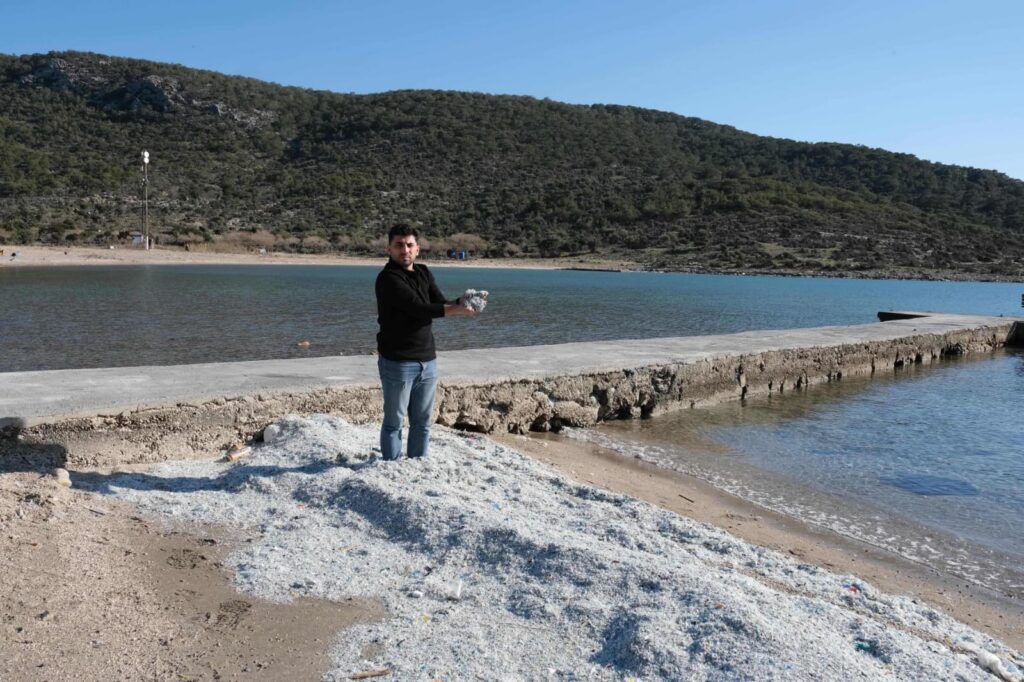
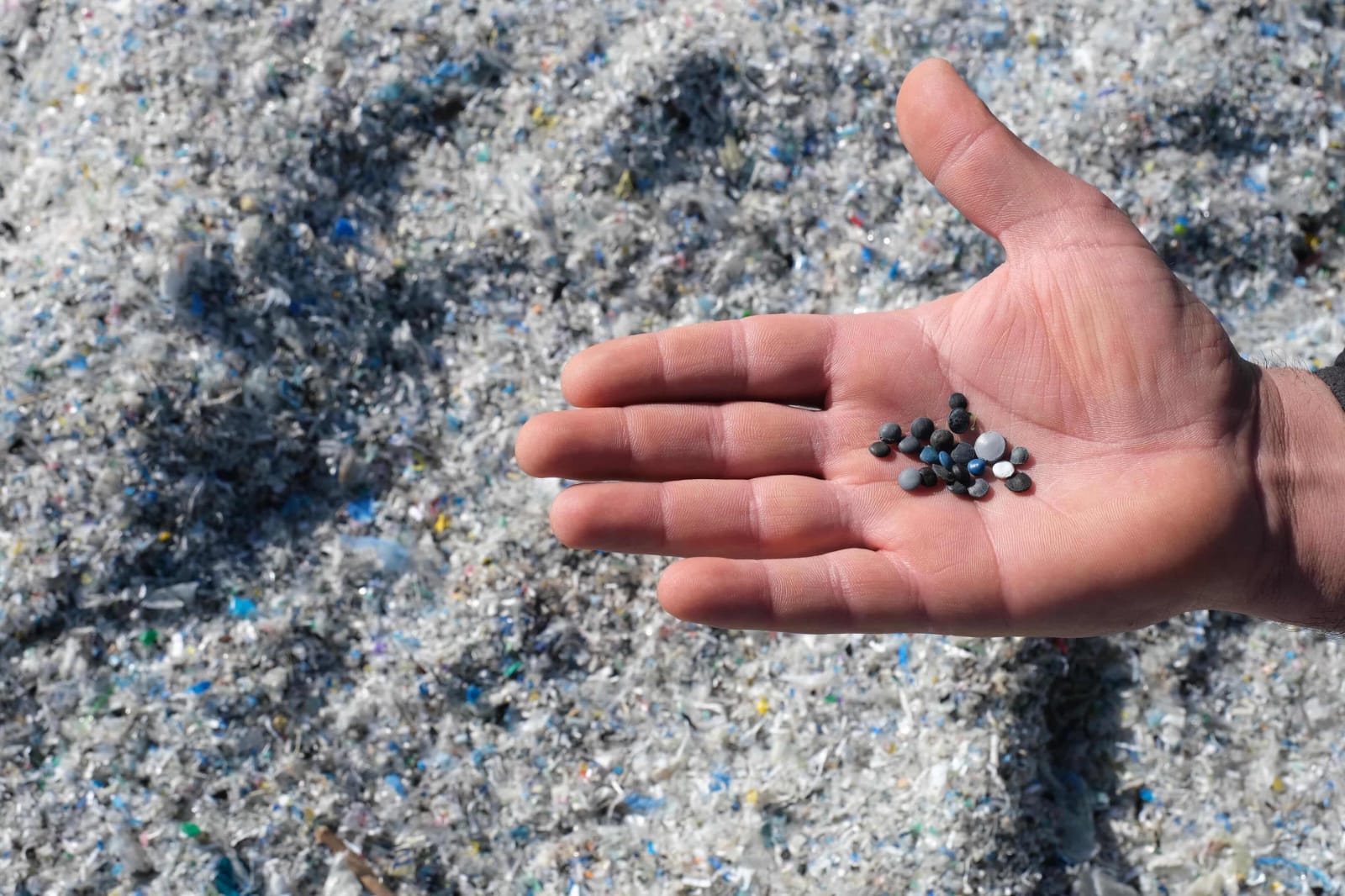
Imported plastic waste washes up on beaches, thick as snowdrifts. Yet unlike snow, they break down into harmful microplastics and leach toxic chemicals into the water and soil. Image credits: Vedat Örüç.
Therefore, any commentary on this issue that reduces the debate to a technical dispute over datasets, while ignoring the environmental and human consequences, should be treated with caution. Science is not a decorative shield for political convenience. And “data” should not be used as a smoke screen to obscure pollution, injustice, and accountability. The real question is not only how many tonnes were traded. The real question is: who pays the environmental and human price for this trade?
These thoughts were originally shared as posts on LinkedIn.
Authors:
Amy Youngman (International Environmental Attorney, Environmental Investigation Agency)
Sedat Gündoğdu (Professor at Cukurova University | Head of Microplastic Research Group | Marine Pollution Researcher | Researcher at Istanbul Policy Center/Sabancı University)