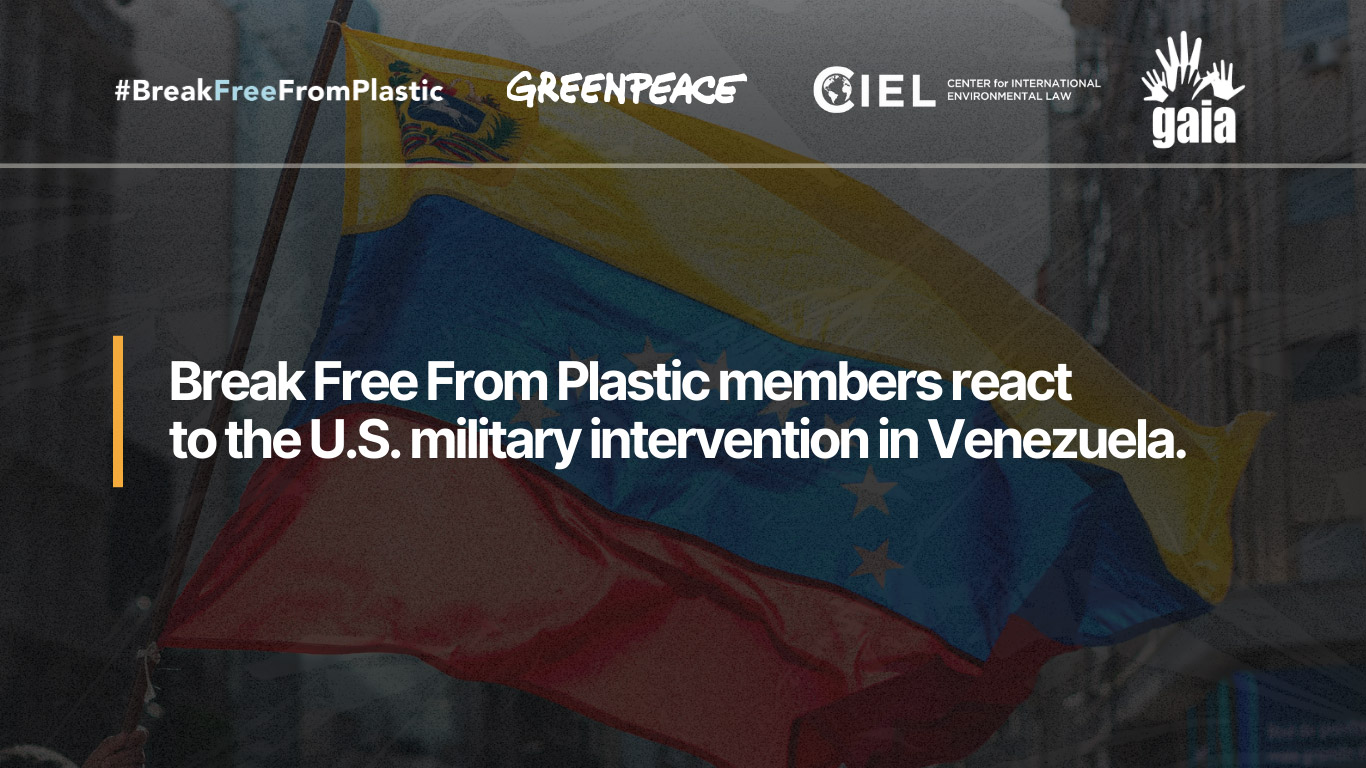
GAIA: Statement rejecting US military intervention against Venezuela
January, 2026.
GAIA, as an international alliance for environmental and climate justice, expresses its deep concern and categorical rejection of the policy of intervention, blockade and siege against Venezuela, expressed through unilateral military actions, use of force and various forms of external interference by the United States. These impositions violate international law and the U.S. Constitution, and undermine the autonomy of the Venezuelan people to face and resolve their political, economic and social challenges without foreign occupation, tutelage or impositions.
Latin America and the Caribbean is a region committed to peace, and we reject any attempt to turn the region into a stage for geopolitical disputes or to reimpose a logic of domination aimed at appropriating land, resources and sovereign decisions for the benefit of US transnational corporations. Sovereignty is non-negotiable: it emanates from the people, and the right to self-determination is an inalienable pillar.
From a perspective of environmental and climate justice, we maintain that the defence of life, territories and democracy is deeply linked to the way we produce, consume and manage common goods. In this context, GAIA promotes systemic change that transforms extractive and colonial economies into regenerative models. These struggles are inseparably linked to the defence of human rights and nature, and to the urgent need to confront a development model that increases consumption, pollutes ecosystems and exacerbates the climate crisis in order to sustain corporate interests and the expansion of fossil fuels. Fossil fuel expansion is precisely what President Trump intends with the invasion of Venezuela.
For all the above reasons, we demand unrestricted respect for the sovereignty and self-determination of peoples and an immediate end to military intervention against Venezuela. The Global North must respond by defending human rights and taking joint action to prevent the continued usurpation of one country’s sovereignty by another. Accepting US intervention through silence and inaction would be a threat to the sovereignty of all countries and peoples.
We will continue our unconditional work for climate justice and for systemic change that puts human rights and the rights of nature above corporate profit and colonial logic.
Link: Pronunciamiento en rechazo a la intervención militar de Estados Unidos contra Venezuela
CIEL: US Military Attack and Oil Grab in Venezuela Flouts Internal Law
WASHINGTON, January 8, 2026— The United States government’s military attack and ongoing oil grab in Venezuela represents an alarming violation of international law and defies the US Constitution. Unilateral military action, with a stated aim of seizing Venezuela’s oil resources, exercising control of the country, and asserting US dominance over the hemisphere, threatens global stability and peace, and neither advances democracy nor respects the human rights and self-determination of the Venezuelan people.
The Maduro government’s record of repression and human rights violations cannot be ignored, but it does not justify unlawful, unilateral intervention by another state. Might does not make right, and circumventing multilateral processes and well-established international and domestic law endangers the rule of law itself. Military strikes to topple a government do not guarantee justice or relief for the Venezuelan people.
The US’s actions also undermine efforts to protect our shared future. At a time of accelerating climate catastrophe, rising authoritarianism, and global instability, the US’s deployment of military power to gain access to fossil fuels recalls a long history of war for oil and sends a dangerous signal that risks emboldening other would-be aggressors. The world needs a rapid, equitable phase-out of fossil fuels, not a new scramble to expand oil production.
Governments must condemn a human rights crisis being used as an excuse to grab oil in the middle of a climate emergency — rather than backing debt relief, democracy, and a just, fossil-free future. Failure to do so all but guarantees further abuses of power, escalating violence, and deeper planetary crisis.
It is a critical moment for all governments to defend the authority of international law and multilateral institutions designed to prevent war and safeguard peace, democracy, human rights, and self-determination.
CIEL calls on all governments to condemn illegal acts of aggression, uphold the rule of law, and defend—not distort—the international legal order on which human rights and climate justice depend. The Venezuelan people deserve democracy, safety, and a future shaped by their own choices.
GP: Greenpeace International calls for protection of Venezuelan people amid oil-driven US intervention
Amsterdam, Netherlands – Greenpeace is deeply concerned about the most recent illegal military action by President Donald Trump against Venezuela, violating both international law and his constitutional powers as US president.
Claiming de-facto control over the country, Trump stated that the US would be “very strongly involved” in the country’s oil industry.
“Venezuela holds the largest proven crude oil reserves in the world. Trump’s own words make it clear that control and exploitation of those reserves is his current priority. In an era of accelerating climate breakdown, eyeing Venezuela’s vast oil reserves this way is both reckless and dangerous. The only safe path forward is a just transition away from fossil fuels, one that protects health, safeguards ecosystems, and supports communities rather than sacrificing them for short-term profit,” warned Mads Christensen, Executive Director, Greenpeace International.
At this critical moment, the rights, safety, and interests of the Venezuelan people must come first. Venezuelans should have the right to peacefully determine their own future free from coercion and violence. The situation must not be allowed to be exploited for short-term oil profiteering or extractive gain by foreign governments or corporations.
“The international community must now act decisively to uphold international law and prevent further harm. Governments should reject unilateral military intervention, demand an immediate de-escalation, and reaffirm the UN Charter’s prohibition on the use of force for political or economic gain. Diplomatic efforts must prioritise civilian protection, independent monitoring of human rights and environmental risks, and accountability for any violations.”
“Crucially, states must resist efforts to exploit the crisis for fossil fuel expansion and instead mobilise financial, legal, and political support for a just transition that serves the Venezuelan people — not oil interests,” said Christensen.
The people of Venezuela have endured years of political turmoil, economic hardship, and deep social suffering, much of it intensified by extractive dependence and external pressure. It is clear that stability will not come through oil fields or military force. It is time to chart a different path. By mobilising climate finance, debt relief, and international support for a just transition to clean energy, governments can help deliver real improvements in livelihoods, protect ecosystems, and support a recovery grounded in dignity, self-determination, and a fossil-free future shaped by people, not profit.