“Sorry, we don’t have single-use cups.” During the hot and humid summer weekends in Guangzhou, China, now you can enjoy a refreshing cup of iced coffee or juice in a more environment-friendly way – to “rent” a cup from a nearby reusable cup rental station, by scanning the QR code on the cup with your phone, and no deposit needed. After finishing your favorite drink, just remember to return the cup by scanning the QR code again on a returning machine.
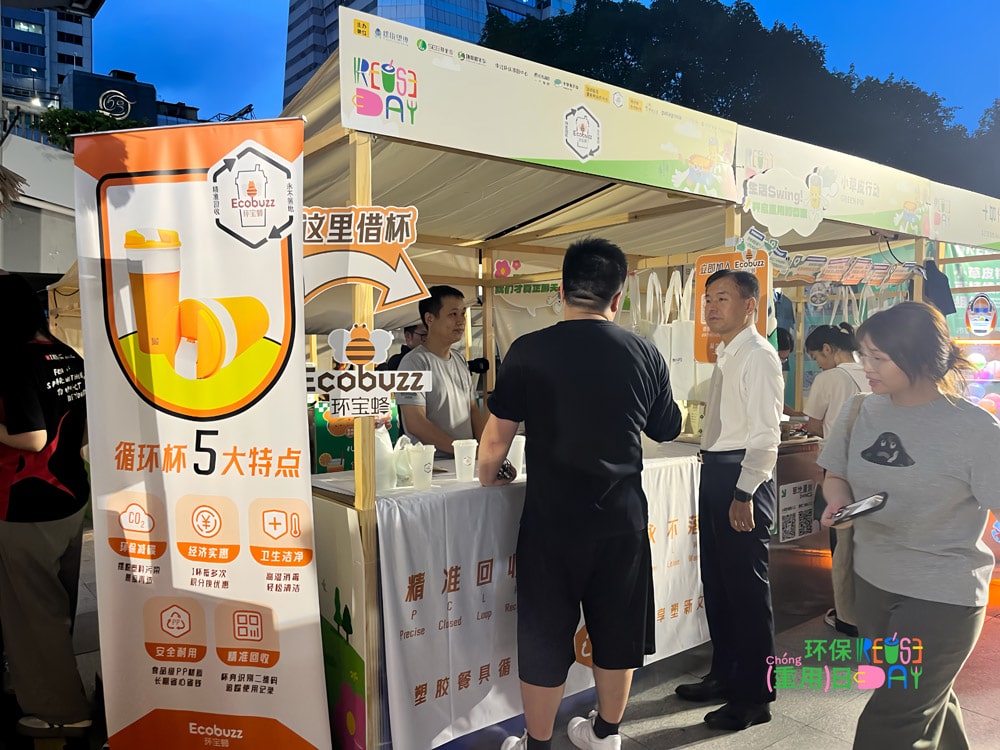
Renting a cup instead of using a single-use one is a great way to reduce plastic waste. On June 21-22 at Poly Sunny Walk (Taojin), consumers were introduced to this new lifestyle on the Reuse Day. "It's a breeze!" a consumer told the reporter after having the coffee.
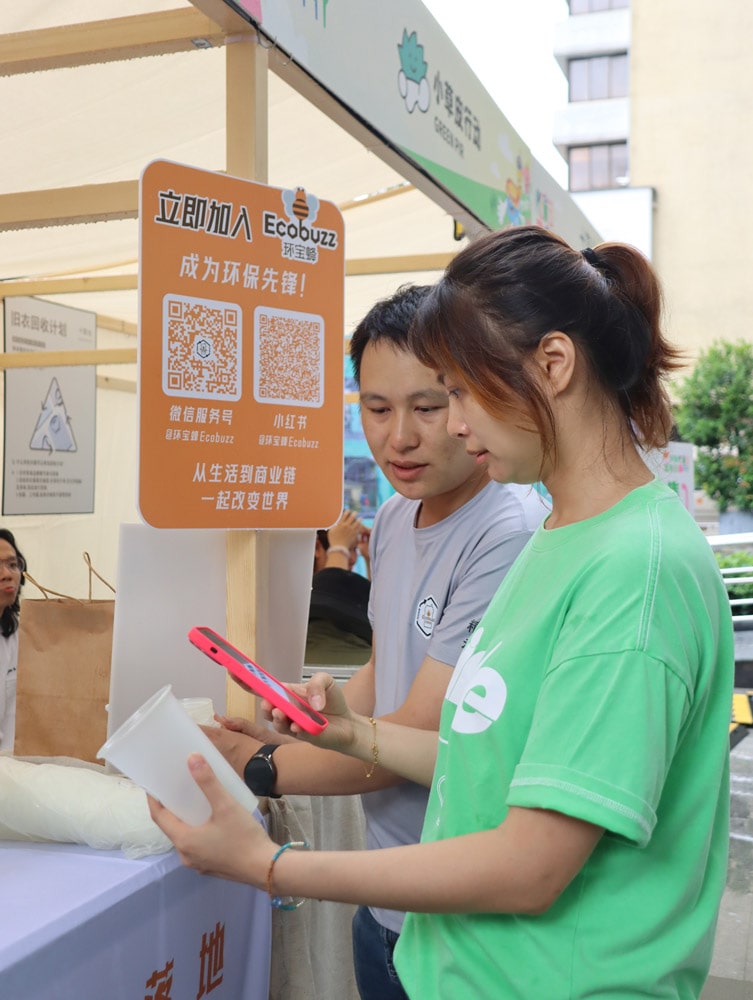
More and more people begin to engage in green actions to protect the health of themselves as well as the earth as a whole, including not using single-use plastic products, and embracing zero-waste practices. In the spirit of environmental protection, the first Reuse Day in China was successfully held in Beijing, Shanghai and Guangzhou, with the aim to advocate reuse, reduce plastic waste and cut carbon emissions. It was co-organized by Plastic Free China, Jingcao Carnival of Society of Entrepreneurs & Ecology, One Planet Foundation, and Green Pir; and partnered with Ecobuzz to supply the reusable cups. The event was also pleased to have Patagonia, China Zero Waste Alliance, Herbeast and Poly Sunny Walk as sustainability partners, and volunteers from DBS Technology China Volunteer Service Team.
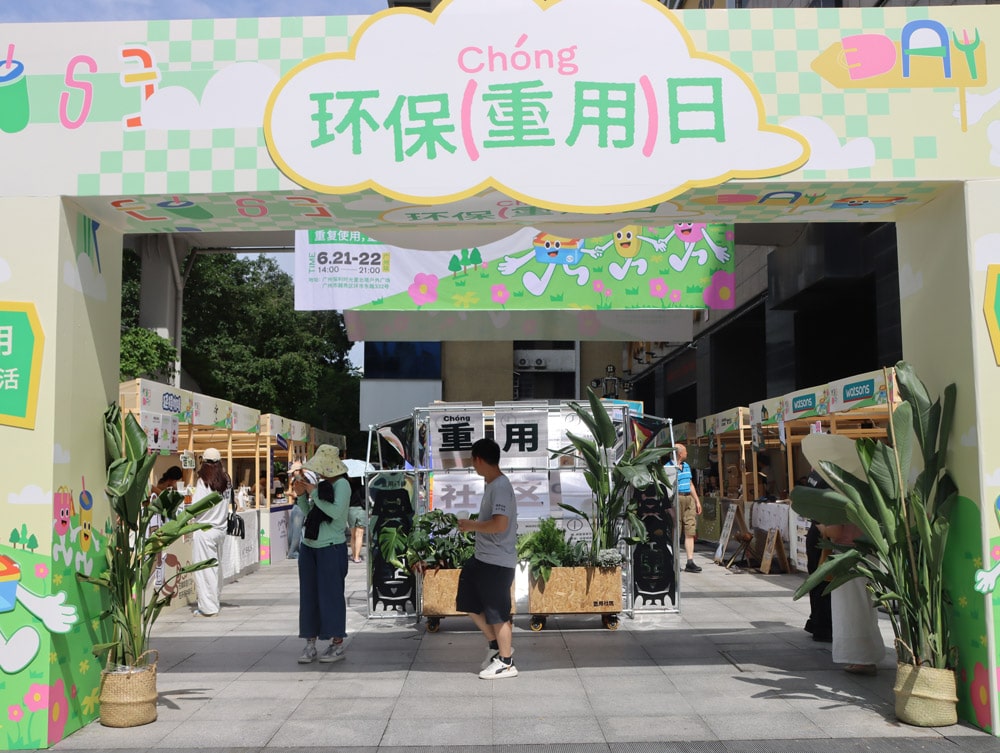
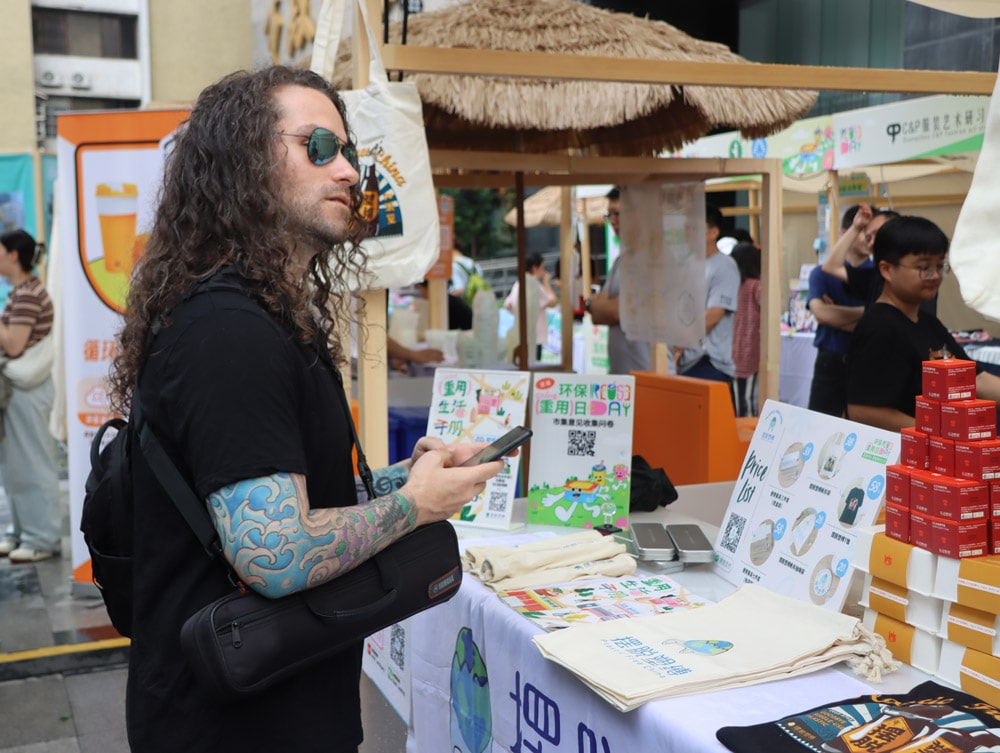
In addition, the first Reuse Day was honored to have Angie Chiu Ngar Chi, actress, and Xu Jiaqi, actress and singer, as Ambassadors, calling on more public engagement in everyday actions that advocates sustainable lifestyle and green consumption habits, in response to building the Beautiful China and Ecological China.
According to Plastic Free China, the Reuse Day attracted over 33,000 visitors in total. The main event was held in Guangzhou, with satellite events in Beijing and Shanghai, bringing together environmental organizations and businesses from across the Greater Bay Area and the nation. The Reuse Day is the first cross-regional program in China that focuses on reuse, and develops a new route to integrate public welfare activities and regional cooperation. It promotes deeper integration in environmental technology and green consumption across the Greater Bay Area, injecting new momentum into regional synergy for building the Beautiful China.
In 2023, more than 410 million tons of plastic were produced around the world, but only less than 9% of them were finally recycled. In big cities in China, for each ton of waste, incineration costs 518 yuan, and landfill, 1,189 yuan. Single-use plastics seem inexpensive, while our environment and society suffer – incineration and landfilling pollute the environment, and plastics eventually break down into microplastics that make their way back into our bodies through the food chain.
Packaging is deeply rooted in the modern lifestyle. Fortunately, people start to look for more environment-friendly alternatives to replace the ubiquitous single-use packaging. In the widely accepted 3Rs principle, namely, Reduce, Reuse, and Recycle, reuse is the core solution that focuses on reduction at the source.
So, what is reuse? “Reuse is all about using an item more than once. It means the item is used over and over again, for the same purpose without changing how it works or its condition, usually not recycled or only slightly repaired,” Zheng Xue, Director-general of Plastic Free China, explained. Take your own bag for shopping, go to a bulk or zero-waste store, and go downstairs with your own cup to get a refreshing coffee during exam week or work – these are typical examples of reuse. And, when you were young, you carried the empty bottle to the kiosk for soy sauce, or grabbed a bowl to buy tofu pudding nearby for breakfast, which are also very early examples of the latest lifestyle.
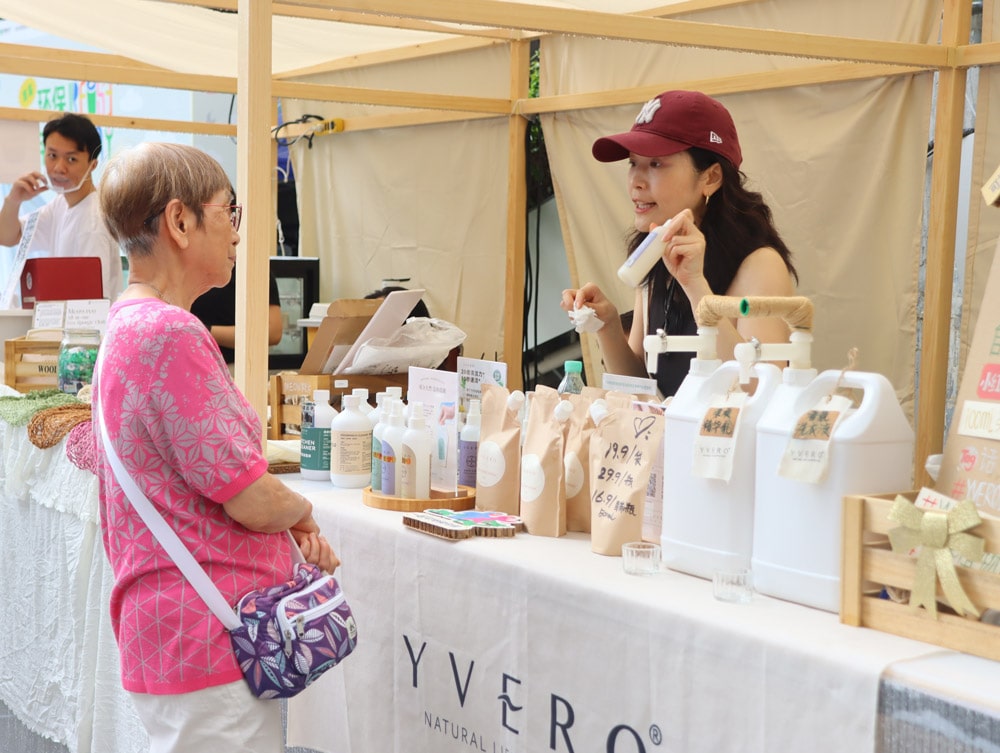
In the field of packaging, the reuse packing system is divided in to four types based on who owns it and where it is used. Namely, they are refilling at home, refilling at a designated place, returning at home, and returning at a designated place. At the event, the reusable cup provided by Ecobuzz falls into the category of returning at a designated place.
At the Reuse Day bazaar, Ecobuzz, the designated reusable cup supplier, provided cups of both hot and cold drinks for rental. Each cup has its own identity QR code, and can be recycled through a special recycling system, which improves reuse and same-level recycling efficiency. In this way, fewer raw materials will be used, thus significantly reducing carbon emissions.
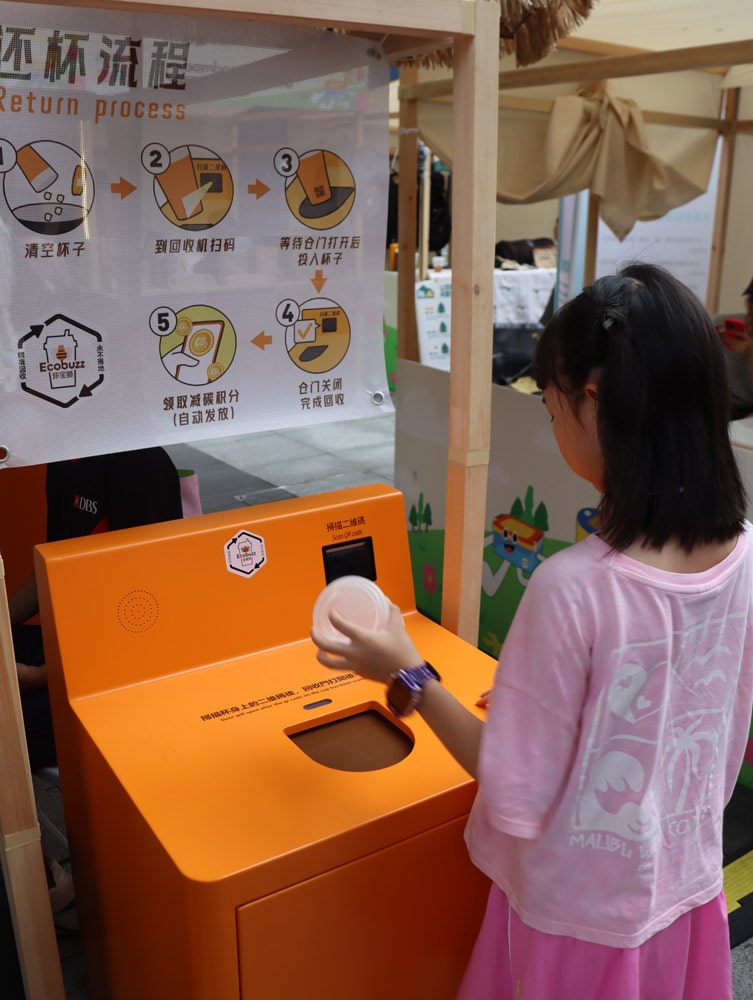
Ecobuzz staff also responded to the hygiene concerns from consumers. Otto, project manager of Ecobuzz, said, “Hygiene and safety are our priorities. We have established a professional cleaning and disinfection process. After the cup is returned, our professional team will implement 6 strict processes, that is, inspect, rinse, clean, disinfect, flush, and dry at high temperature. All cups will be manually inspected before they are put back into use. In addition, we will regularly sample the cleaned cups and send to the laboratory for testing, to ensure the cups meet the hygiene standards.”
As green consumption habits of zero plastic and zero waste go popular, bulk and zero-waste shops pop up in cities. Before going to these shops, consumers need to prepare necessary packaging themselves, such as glass bottles, shopping bags, and bags for fresh food. Maxam, a daily chemical product producer, made a special appearance at the Bazaar with its eye-catching bulk laundry detergent and refilling tools. Participants can take the detergent away in their own containers after completing the interaction games at the booth. At the Guangzhou venue, Buy Something Farm Store presented a series of bulk healthy snacks and homemade organic drinks, attracting many to have a try.
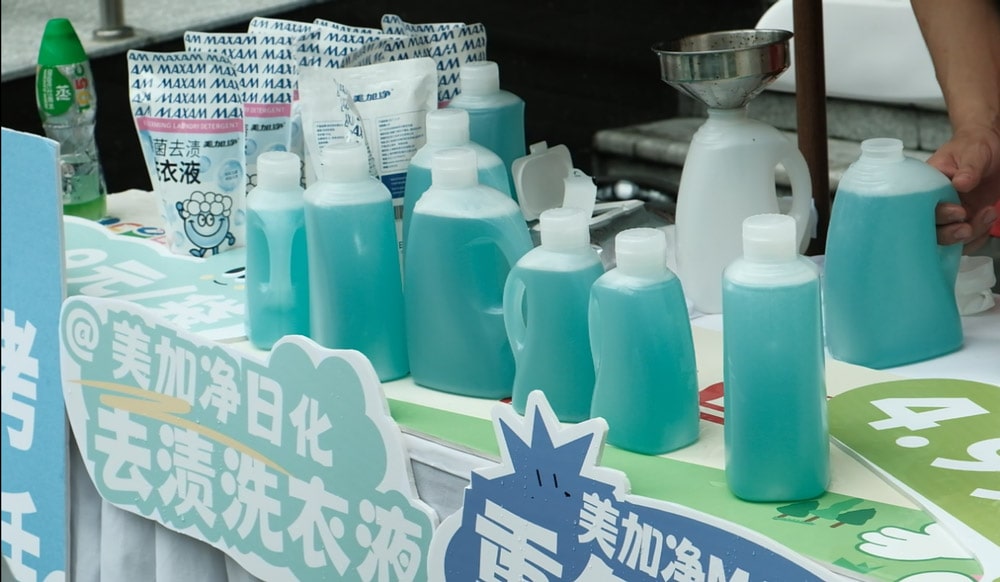
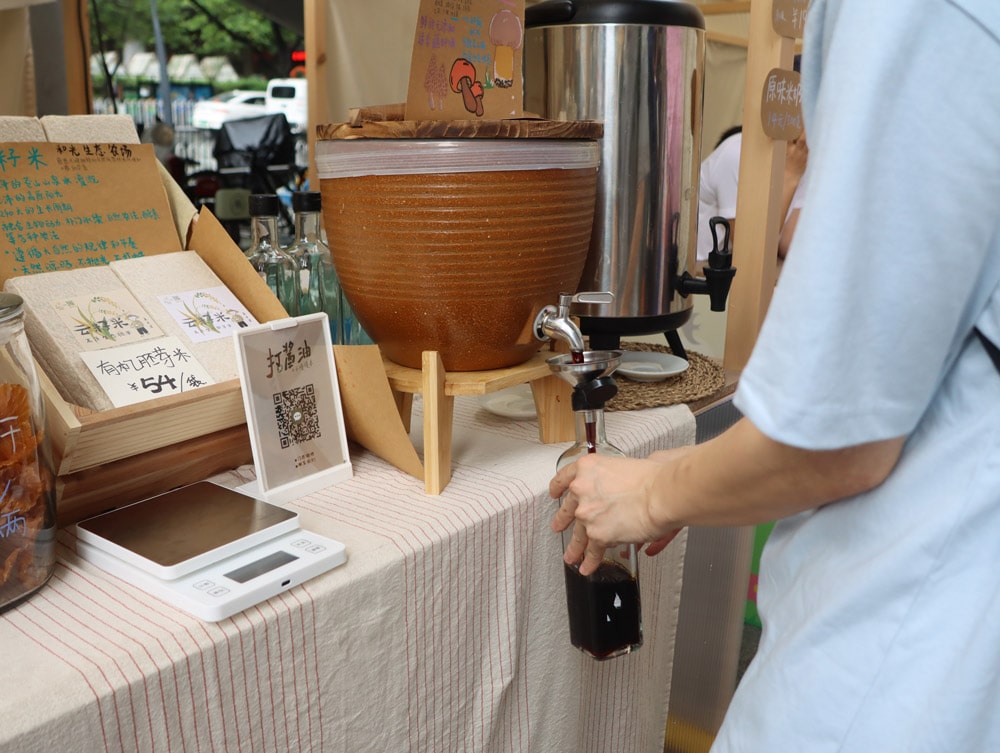
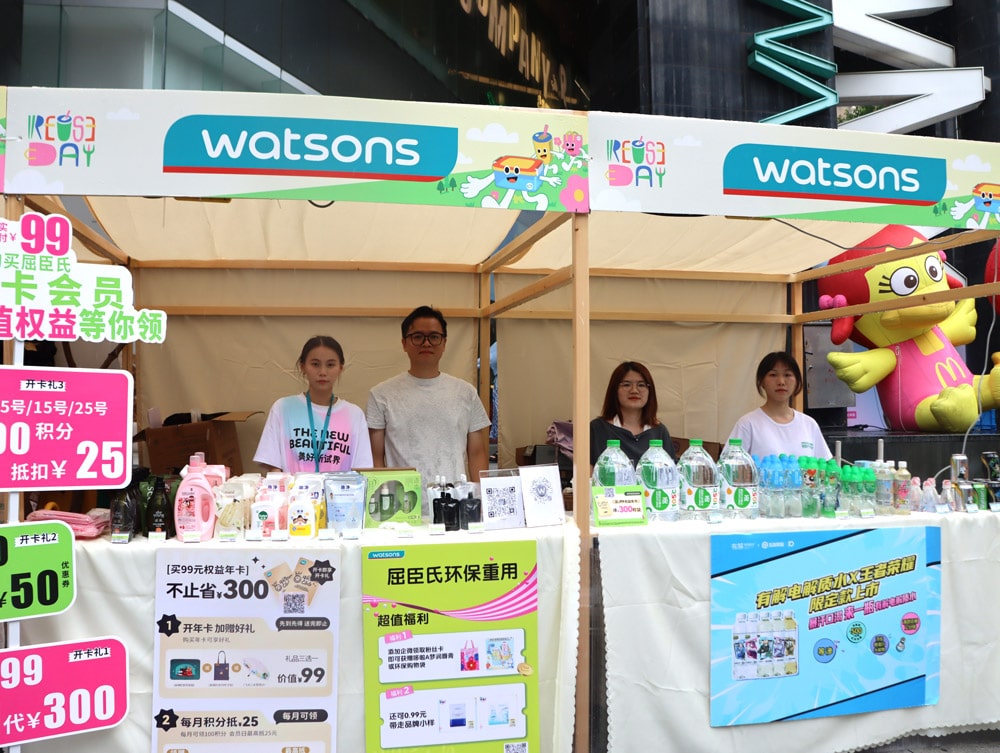
More and more daily chemical product producers are joining in this trend, by introducing bagged refills of laundry detergent, clothing conditioner, shampoo and hand soap, so that consumers can refill their empty bottles. Meanwhile, many personal and skin care product producers also have introduced refills and replacement cartridges with lighter packaging and relatively less waste. At the first Reuse Day bazaar, many brands brought a wide range of refill products for consumers to choose from, including Watsons, SukGarden, Dettol, Spes, Curel, Zhuben, and KireiKirei, to name a few. The all-paper decorated booth of BambooComet, a sustainable lifestyle brand, drew the attention of many visitors. Known as a plastic-free home living brand, ranging from product to packaging, it has already received praise from numerous fans for its commitment to zero plastic use. “Buying a pack of BambooComet pocket tissues (160 sheets) means reduction of about 23 small plastic bags, equivalent to at least 25 grams of single-use plastic,” a staff of the brand introduced at the booth.
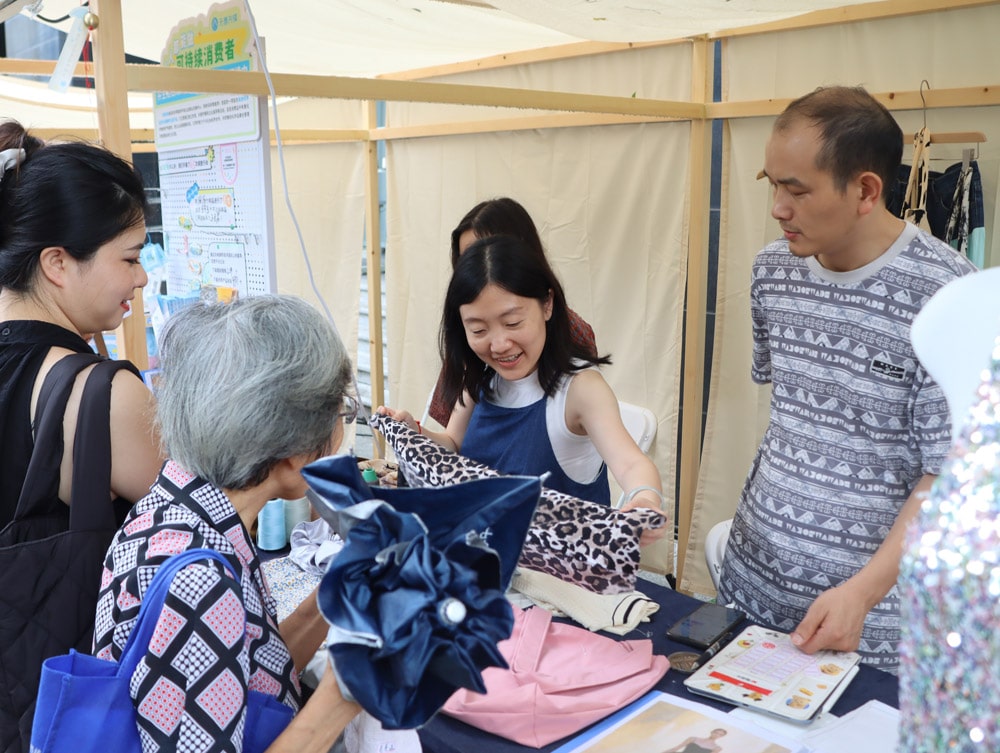
Zero-waste initiatives, such as second-hand flea markets and repairing instead of discarding, give birth to new businesses as well. The C&P Clothing Art Center, initiated by young people in Guangzhou, along with other clothes-mending booths, offered a variety of services including basic repairs, creative mending, and upcycling. Moreover, these booths offer tailored makeover plans for old clothes with sentimental value, which attracted a lot of attention as well as orders.

In the context of frequent occurrence of extreme weather, people become more aware of the climate change crisis, and more willing to shift to the environment-conscious lifestyle. In the future, reuse will be further integrated to everyday scenarios, and enables everyone to live a life that is convenient, environment-friendly, high-quality, and healthy. At the Reuse Day bazaar stood the art installation, “Reuse Community”, created by the Guangzhou-based artist studio Springflut. It was covered with visitors’ visions and hopes for the future of reuse: "Running into a reuse lifestyle with kitties!" "Living close to neighbors, pursuit for beauty," "A future without illness"... Reuse, it seems, is not only a solution to the environmental crisis, but also a path to a better, healthier, and more harmonious life.