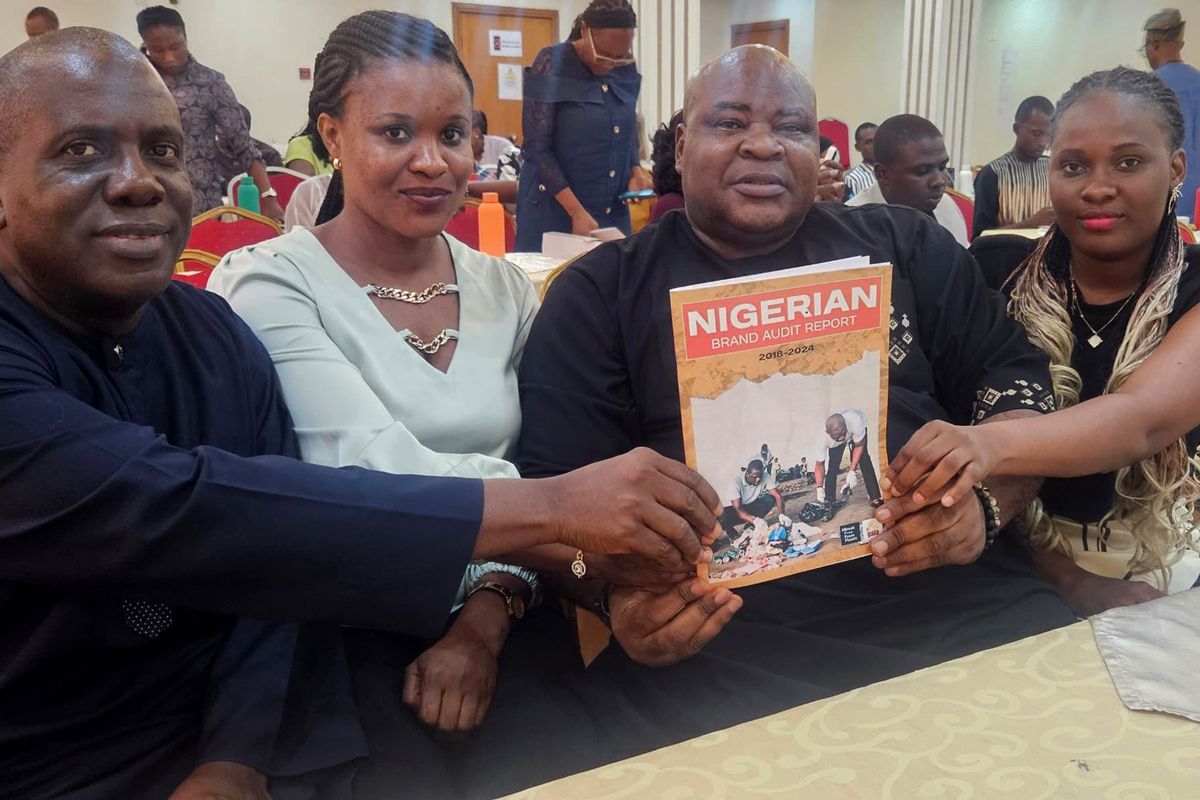
Lagos, Nigeria — A nationwide plastic brand audit conducted across eight Nigerian cities by Break Free From Plastic (BFFP) and the Global Alliance for Incinerator Alternatives (GAIA) has identified multinational beverage companies and single-use plastic producers as the largest contributors to Nigeria’s worsening plastic pollution crisis.
The report examined 298,174 pieces of plastic waste collected during community clean-up exercises in Osogbo, Jos, Ughelli, Warri, Port Harcourt, Lagos, Uyo, and Benin City. The findings show that sachets, plastic bottles, bags, and wrappers dominate Nigeria’s waste stream.
Nigeria produces an estimated 2.5 million metric tonnes of plastic waste every year, yet only a small fraction is recycled. In Lagos alone, plastic waste is a major cause of blocked drains, contributing to flooding that costs the state billions of dollars in annual damage.

Sachets and Bottles Top the Waste Chart
The audit found that sachet packaging, commonly used for water and beverages, was the most common plastic waste item identified, followed closely by plastic bottles. Plastic bags and wrappers ranked third and fourth. Despite their popularity due to affordability, sachets are single-use, non-recyclable, and remain in the environment for hundreds of years. An estimated 60 million water sachets are discarded daily in Nigeria, totalling over 20 billion annually.
Top Polluters
The audit identified Coca-Cola and PepsiCo as the leading multinational companies linked to plastic pollution across the audited cities. Other major contributors include Nestlé, Rite Foods, CWAY Group, and several local table-water producers.
“These findings confirm what communities have long known — plastic pollution in Nigeria is not caused by poor people, but by corporate practices that prioritise profit over the environment,” explains Weyinmi Okotie, GAIA/BFFP Africa Clean Air Program Manager.
While Nigeria has made policy commitments to tackle plastic pollution, including the National Policy on Plastic Waste Management, new regulations targeting single-use plastics, and a ban on single-use plastics in government offices, enforcement across the country remains uneven and slow. At the state level, Lagos, Oyo, Abia, and Anambra States have announced or begun enforcing bans on certain single-use plastics, with Lagos implementing the strictest measures to date.
Recommendation
- Nigeria’s federal and state governments should shift from voluntary commitments to enforceable plastic regulations by supporting binding global and national plastic production-reduction targets compatible with climate boundaries under the new global plastics treaty.
- Enforce Extended Producer Responsibility (EPR) standards that are national, mandatory and strengthened to integrate waste pickers and other waste workers; mandates that producers and importers assume full financial responsibility for all costs associated with plastic waste management; are piloted and regulated by governments and above all, respect the waste hierarchy prioritising reduction and reuse.
- Corporations in the country must stop greenwashing and reduce plastic production by investing in reuse and refill systems and safer alternatives.
- We call on Civil society and researchers to continue exposing polluters, supporting waste pickers, and providing evidence-based solutions.
“The plastic crisis in Nigeria is driven by a throwaway culture fueled by the fossil fuel industry. Delay is no longer an option. Corporate profit must never come before public health and environmental safety. Polluters must be held accountable, and strong regulations must be defended,” adds Weyinmi.
About the Report
The Nigerian Plastic Brand Audit Report were jointly developed by: Green Knowledge Foundation (GKF); Centre for Earth Works (CfEW); Sustainable Research and Action for Environmental Development (SRADeV); Community Development Advocacy Foundation (CODAF); Pan African Vision for the Environment (PAVE); Sustainable Environment Development Initiative (SEDi); Policy Alert; Community Action Against Plastic Waste (CAPws); Lekeh Development Foundation (LEDEF); Ecocykle Development Foundation; and the Association of Waste Pickers of Lagos (ASWOL).
The initiative was carried out under the BFFP & GAIA movement in Africa.
ENDS
For more information, please contact:
BFFP Africa: Masego Mokgwetsi - masego@breakfreefromplastic.org
GAIA Africa: Ibrahim Khalilulahi Usman - khalil@no-burn.org
About GAIA & BFFP
GAIA: GAIA is a global network of grassroots groups, non-governmental organisations (NGOs), and individuals, in over 90 countries. The organisation envisions a just, zero-waste world built on respect for ecological limits and community rights, where people are free from the burden of toxic pollution, and resources are sustainably conserved, not burned or dumped. GAIA works to catalyse a global shift towards environmental justice by strengthening grassroots social movements that advance solutions to waste and pollution. www.no-burn.org
BFFP: The #BreakFreeFromPlastic (BFFP) Movement is a global movement envisioning a future free from plastic pollution. Since its launch in 2016, more than 12,000 organisations and individual supporters from across the world have joined the #BreakFreeFromPlastic movement to demand massive reductions in single-use plastics and to push for lasting solutions to the plastic pollution crisis. www.breakfreefromplastic.org