Nairobi, KENYA – The seventh session of the United Nations Environment Assembly (UNEA-7) concluded today, showing how geopolitics continues to undermine multilateralism. During the one-week talks, environmental ministers and world leaders adopted less than half of the resolutions presented to “advance sustainable solutions for a resilient planet,” primarily regarding the mining of minerals and metals, a stronger global response to wildfires, and sustainability in sports (which was the only resolution with a brief mention of single-use plastics). At the same time, countries utterly neglected important measures on environmental crime and the protection of deep-sea and karst ecosystems, among others.
Importantly, the approved resolutions failed to include language to protect Indigenous Peoples, women, gender expansive people, Black People, and other impacted communities as mandated by the UN Declaration on the Rights of Indigenous Peoples, the Convention on Ending All Forms of Discrimination Against Women, and the International Convention on Ending All Forms of Racial Discrimination.
During the assembly, obstructionist countries deployed the same derailing tactics seen at both the most recent UN Climate Conference (COP30) and the ongoing negotiations for a Plastics Treaty, as well as some new ones that reflected the changing geopolitical mood. Unfortunately, these efforts have been successful (at least so far) in undermining international measures that would otherwise effectively address the planetary crises. And still, the fight to protect those most impacted by these crises continues.
The most constructive parts of UNEA-7 happened on the sidelines of the negotiations, including several events and actions focused on urgently addressing the plastic pollution crisis at a global level. For example, on December 9th, the Environmental Investigation Agency, a Break Free From Plastic (BFFP) member, organized a breakfast briefing focused on how to create the right conditions for advancing the global Plastics Treaty negotiations, bringing together governments, the private sector, academic institutions, and NGOs.
BFFP members also engaged in an official side event hosted by the Kenyan government on December 11th which gathered Ministers of governments and civil society leaders to discuss the future of the global Plastics Treaty. The dialogue focused primarily on how to shape an effective intermediary period before the next round of talks, as well as which pathways would be the most likely to secure a treaty that is ambitious and inclusive for all.
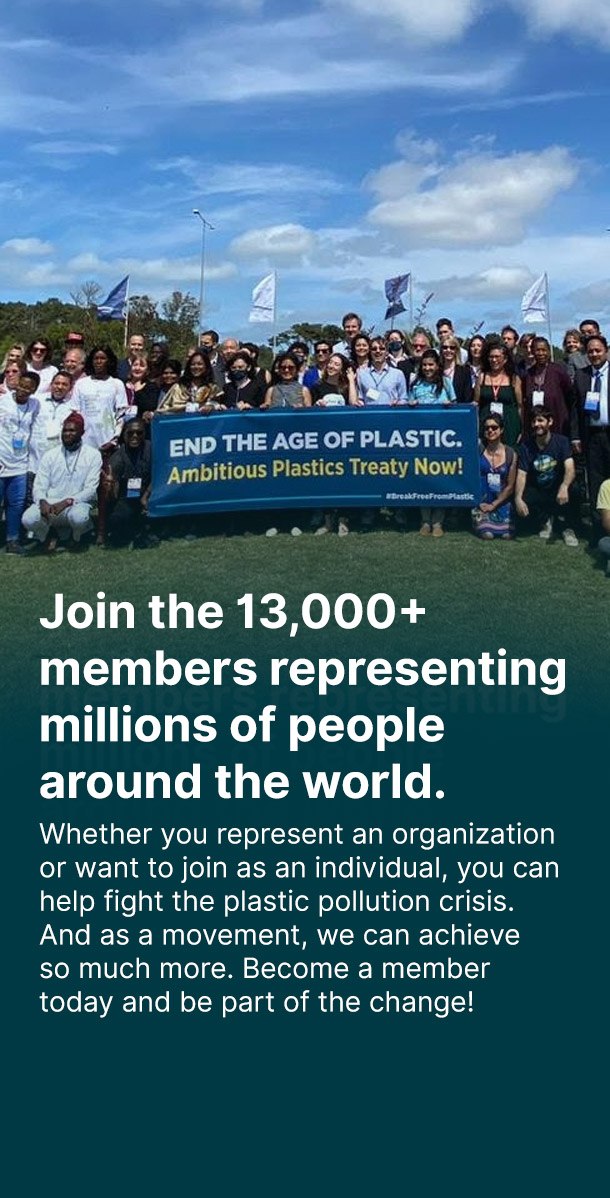
Earlier, before the actual start of UNEA-7, dozens of BFFP members and allies organized an on-site photo action to underscore the interconnectedness of plastic pollution with other pressing issues, such as climate change, biodiversity loss, health, and the rights of marginalized communities, including Indigenous Peoples, Black People, women, and youth.
Now, as UNEA-7 concludes in Nairobi and governments prepare to attend the next round of Plastics Treaty negotiations (INC-5.3) in Geneva on February 7, 2026, to select a new INC Chair, BFFP continues to call for the urgency of multilateral cooperation in order to deliver a global instrument that fulfills the mandate of UNEA Resolution 5/14 and addresses the plastics crisis across the full life cycle, from extraction to production, use, and disposal.
Together with civil society leaders around the world, we urge governments to persevere towards a strong, legally-binding treaty that cuts plastic production and protects human health, human rights, and the environment.
###
Break Free From Plastic members react to UNEA-7
Juressa Lee, Indigenous Peoples Major Group (New Zealand), said:
“UNEA-7 has failed Indigenous Peoples, and in doing so has weakened the credibility of environmental decision-making. We should not have to fight to participate in processes that systematically erode our right to full and effective participation, despite our rights being clearly recognised in international law ... Despite the disappointing outcome of UNEA-7, Indigenous Peoples remain the Earth’s first defenders. We will continue to protect our territories, our rights, and the future of the planet.”
Ana Rocha, Global Alliance for Incineration Alternatives (Tanzania), said:
“UNEA-7 left many of us deeply concerned. It failed to create real space for agreement on critical issues, from deep-sea protection to the fight against environmental crime. Yet on plastics, the energy was undeniable. The large number of delegates present in side events, unofficial gatherings, and hallway discussions showed one thing: the pathway forward must be inclusive, transparent, and representative of the mandate at hand. It is time for countries to converge around a meaningful, forward-looking plastics treaty, guided by a fair, transparent, and effective process, and by leadership that matches the urgency of the crisis.”
Jo Banner, The Descendents Project (USA), said:
“UNEA-7 showed that governments are more seriously addressing issues like chemical pollution, mineral extraction, and ocean health. Yet, the exclusion of frontline communities – especially afro-descendant populations – from most of the programming exposed huge gaps in the process. When those most harmed by plastic are left out, ambition is weakened, and false solutions take root. There can be no meaningful response to the environmental crisis without full inclusion of fenceline communities and afro-descendants, who are not only closest to the harm of plastic but also closest to the solutions.”
Erika Xananine Calvillo Ramírez, Jna Tsjo / Indigenous Peoples Major Group (Mexico), said:
“We have witnessed once again the failure of institutions such as the United Nations to address the most serious environmental crises. UNEA-7 has failed us and the world by enabling mechanisms that favour the interests of extractivist industries that have proven to be the source of the problem.”
Christina Dixon, Environmental Investigation Agency (UK), said:
“The progress on plastics this week didn’t happen in the negotiation rooms. It happened in the hallways, at side events, and over dinners, where bold ideas and renewed momentum began to take shape. While delegations wrestle with uncertain leadership in the plastics treaty negotiations, the energy in the margins of UNEA showed that momentum can be revived. But we must be clear: rushing to unblock negotiations or push for a low ambition compromise risks delivering a weak treaty. As we leave Nairobi, we urge governments to stay true to the UNEA 5/14 mandate and deliver the strong, binding plastics treaty the world urgently needs.”
Additional quotes are being provided here.
Note to the editor:
- Photos of the Break Free From Plastic action in Nairobi (Credit: James Wakibia)
- EIA breakfast briefing (Credit: James Wakibia)
Media Contact: news@breakfreefromplastic.org
About BFFP — #BreakFreeFromPlastic is a global movement envisioning a future free from plastic pollution. Since its launch in 2016, more than 2,700 organizations and 11,000 individual supporters from across the world have joined the movement to demand massive reductions in single-use plastics and push for lasting solutions to the plastic pollution crisis. BFFP member organizations and individuals share the values of environmental protection and social justice and work together through a holistic approach to bring about systemic change. This means tackling plastic pollution across the whole plastics value chain – from extraction to disposal – focusing on prevention rather than cure and providing effective solutions. www.breakfreefromplastic.org.