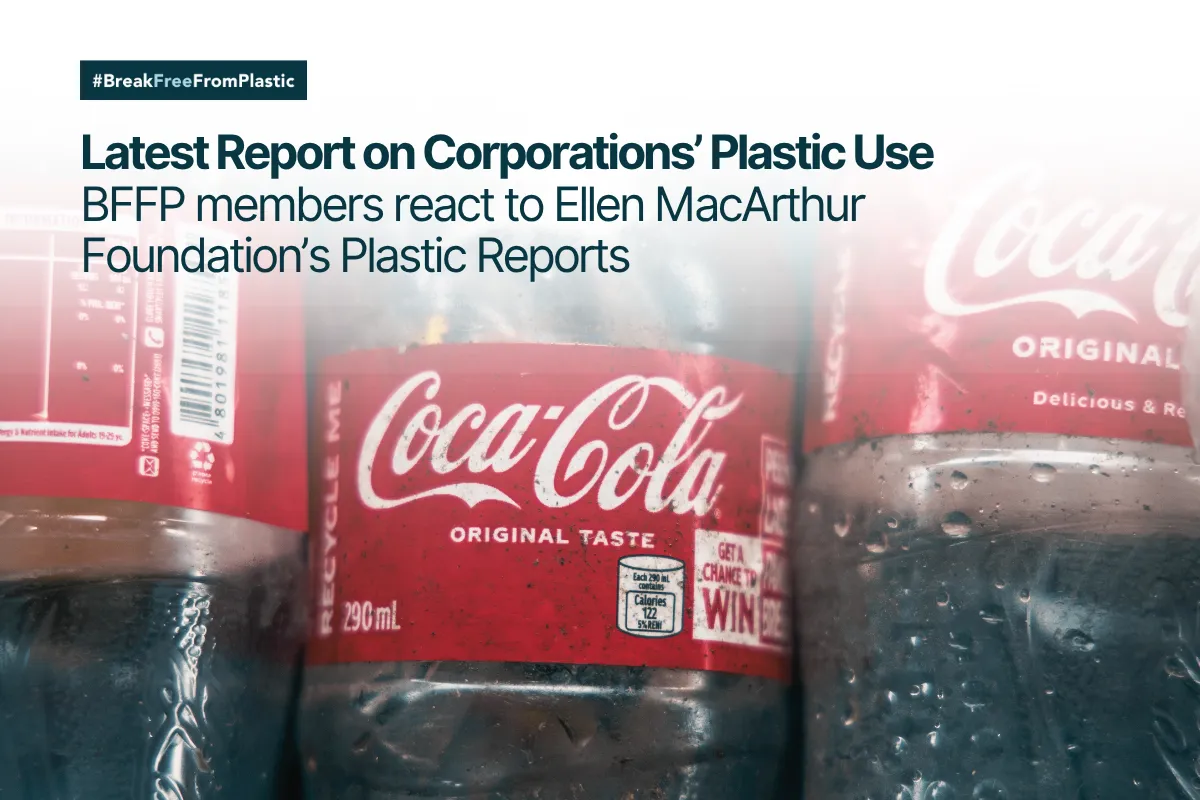
On November 4th, the Ellen MacArthur Foundation released the Global Commitment Progress Report 2025, showing businesses’ plastic use performance based on their voluntary global efforts against plastic waste. Although the companies had a slight decrease in average plastic use, it is worth noting that the Top Plastic Polluter, The Coca-Cola Company, increased its use of virgin plastic by 10% despite its voluntary commitments to tackle plastic pollution.
The publication also includes a 2030 Plastic Agenda for Business report, setting new corporate goals for the next five years.
Some BFFP members react to the announcement:
Martin Bourque, Ecology Center (USA), said:
"While the reductions by these companies are laudable, they once again fall far short of the voluntary commitments they touted. It's time for a binding international instrument to dramatically reduce plastic pollution, level the playing field, and get beyond greenwashing and lip service."
Frédérique Mongodin, Seas At Risk (Europe), said:
"How disappointing that plastic packaging multinationals are celebrating a mere 3% reduction in global plastic production - a change made possible by the phase out of single-use plastics required by EU and national laws globally. They also fail to mention that global plastic production, as well as their own revenues, are projected to soar in the coming future.
International environmental groups must engage with industry leaders to find solutions, but mass recycling is not the answer. Truly sustainable packaging should be minimal, toxic-free, biodegradable, and - where possible - completely avoided."
Dr. Dana Miller, Oceana, Director of Strategic Initiatives, said:
“At a time when plastic pollution is devastating our oceans and threatening human health, Coca-Cola’s plastic use has grown by over a billion pounds in just five years. This is shameful. We need bold and urgent action to address this crisis, including ramping up reusable packaging at-scale. As the top polluter of branded plastic found in the environment, Coca-Cola must be transparent about its plastic use and it must recommit to prioritizing reusable packaging.”